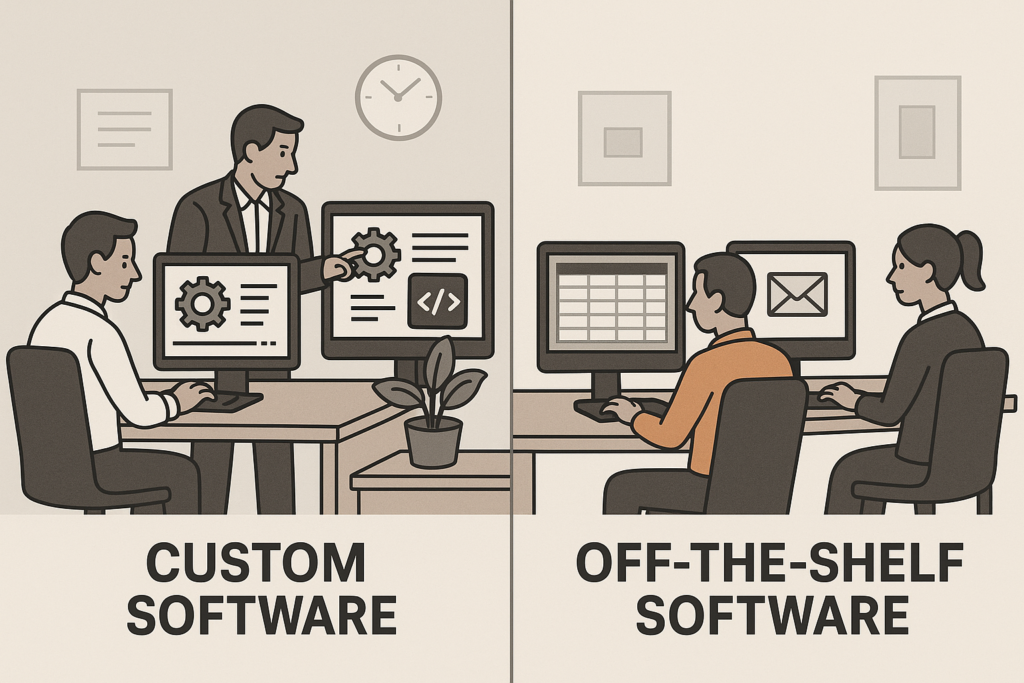
Choosing between custom software vs off-the-shelf software is a crucial decision for any business. Both options have unique advantages and drawbacks that can significantly impact your operations, budget, and growth. In this article, we explore the key differences between these two types of software, provide real-world examples, and guide you on when to choose each.
What Is Off-the-Shelf Software?
First, off-the-shelf software refers to pre-built applications designed for a broad audience. These products are ready to use immediately after purchase, offering standard features that meet common business needs. Because of this, they often come at a lower initial cost and faster deployment time.
For example, popular off-the-shelf software includes Microsoft Office, QuickBooks, Salesforce, Slack, and Adobe Photoshop. These programs serve a wide range of industries and users without requiring extensive customization.
Moreover, off-the-shelf software may offer limited customization through settings or add-ons, but it generally cannot be extensively altered to fit very specific requirements.
For a deeper dive into this topic, check out our detailed guide on Understanding Off-the-Shelf Software: Benefits & Drawbacks.
What Is Custom Software?
In contrast, custom software is built specifically for a business or organization to meet unique needs. It is developed from scratch or heavily tailored to fit particular workflows, processes, or goals. Because of this, custom software can provide a competitive advantage by addressing challenges that off-the-shelf solutions cannot.
However, custom software requires more time and investment upfront. The development process involves close collaboration with software developers to define requirements, design features, and test the final product.
Businesses often choose custom software when their needs are too complex or specialized for off-the-shelf options. If you want to learn more about costs involved, visit our Custom Software Development Cost Pricing Guide.
Key Differences Between Custom Software and Off-the-Shelf Software
To make this clearer, here are the main differences between custom and off-the-shelf software:
- Purpose and Fit: Off-the-shelf software is designed for general use, while custom software is tailored to specific business needs.
- Cost: Off-the-shelf options usually have lower upfront costs. Custom software involves higher initial investment but may save money long-term by improving efficiency.
- Implementation Time: Off-the-shelf software can be deployed quickly. Custom software requires a longer development cycle.
- Flexibility: Custom software offers greater flexibility and scalability, whereas off-the-shelf software has limited customization.
- Support and Maintenance: Off-the-shelf products include vendor support and updates. Custom software requires dedicated maintenance, often with the original developers.
- Ownership: Custom software is owned by the business, providing full control. Off-the-shelf software licenses restrict usage and modifications.
Examples of Off-the-Shelf Software
For example, many businesses rely on these common off-the-shelf applications:
- Microsoft Office: A suite of productivity tools like Word, Excel, and PowerPoint.
- QuickBooks: Accounting software for small to medium-sized businesses.
- Salesforce: Customer Relationship Management (CRM) platform widely used across industries.
- Slack: Team communication and collaboration tool.
- Adobe Photoshop: Graphic design and photo editing software.
These products are ideal when your business needs standard features that are ready to use immediately.
Examples of Custom Software Use Cases
Meanwhile, custom software shines in scenarios such as:
- Industry-Specific Solutions: For example, a healthcare provider may need software that complies with HIPAA regulations and integrates with medical devices.
- Unique Business Processes: Companies with proprietary workflows can automate tasks that off-the-shelf software cannot handle effectively.
- Integration Needs: When a business requires seamless integration between multiple systems, custom software can unify these platforms efficiently.
- Scalability and Growth: Custom solutions can evolve with your business, adding new features as needed.
When to Choose Off-the-Shelf Software
Businesses should choose off-the-shelf software when they need a cost-effective, quick-to-implement solution that covers common needs without requiring extensive customization. For instance, startups or small businesses with standard operational demands often benefit from off-the-shelf options.
Also, if your budget is limited or you want to test software functionality before committing, off-the-shelf software is a practical choice.
When to Choose Custom Software
On the other hand, custom software is ideal when your business has specialized needs that off-the-shelf software cannot address effectively. If you require unique features, high flexibility, or proprietary integrations, custom development is worth the investment.
Moreover, if your business plans for long-term growth and scalability, custom software can adapt alongside your evolving requirements.
Summary of Considerations
- Assess your business needs: Identify whether your processes are standard or unique.
- Evaluate budget and timeline: Off-the-shelf software is faster and cheaper upfront; custom software requires more investment and time.
- Consider flexibility and control: Decide if you need full ownership and customization.
- Plan for future growth: Choose software that can scale with your business.
Frequently Asked Questions
What are some common examples of off-the-shelf software?
Common examples include Microsoft Office, QuickBooks, Salesforce, Slack, and Adobe Photoshop—software that is pre-built and ready for general use.
How does off-the-shelf software differ from custom software?
Off-the-shelf software is pre-made for a broad audience, offering quick deployment and lower cost, while custom software is tailored specifically to a business’s unique requirements.
When should a business choose off-the-shelf software?
Businesses should choose off-the-shelf software when they need a cost-effective, quick-to-implement solution that covers common needs without requiring extensive customization.
Can off-the-shelf software be customized?
Some off-the-shelf software offers limited customization options, such as configurable settings or add-ons, but it generally cannot be altered extensively like custom software.
To explore pricing for custom solutions, visit our Custom Software Development Cost Pricing Guide.
Leave a Reply