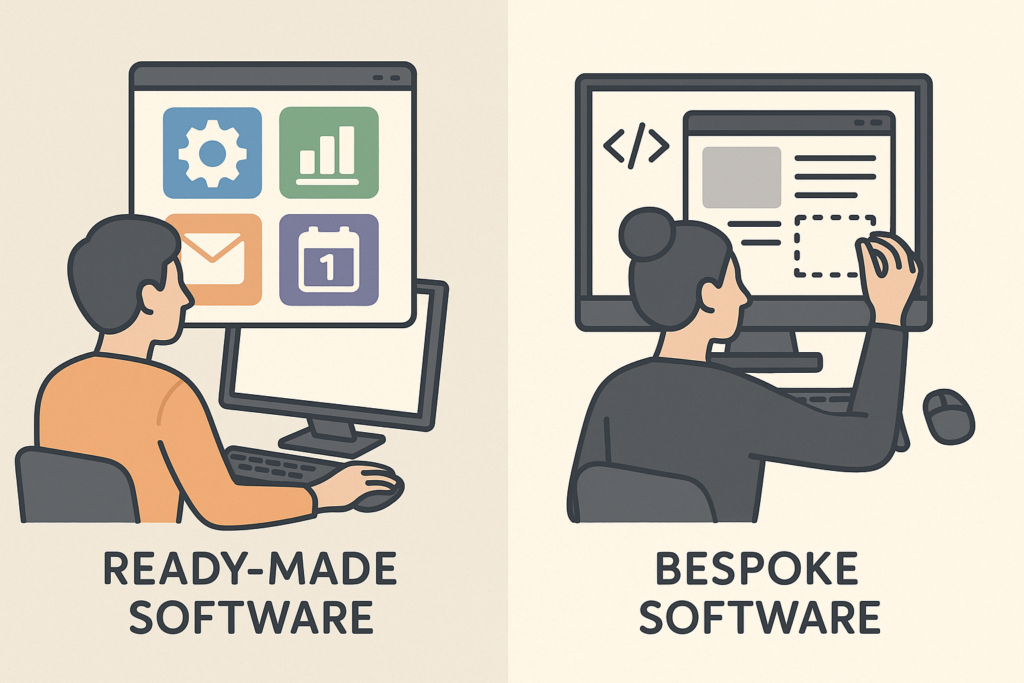
When starting your software journey, understanding the difference between off the shelf and bespoke software is crucial. Both options serve different purposes and suit various business needs. Therefore, knowing their benefits and drawbacks will help you make an informed decision.
Moreover, whether you are a small business owner or a project manager, this guide will clarify these software types in simple terms.
What Is Off-the-Shelf Software?
First, off-the-shelf software refers to ready-made programs available for purchase or subscription. These solutions are designed to address common business tasks, such as accounting, customer support, or marketing automation.
For example, popular office suites, email clients, and CRM platforms often fall under this category. They are developed for a broad audience and come with standard features.
Because of this, off-the-shelf software usually offers quick deployment and lower upfront costs. However, it may lack customization options to fit unique business processes perfectly.
To learn more about off-the-shelf options, check out our detailed guide on Off-the-Shelf Software Explained: Benefits, Drawbacks & Fit.
What Is Bespoke Software?
In contrast, bespoke software is custom-built to meet specific requirements of a business. It is tailored from scratch or heavily modified from existing frameworks to align with unique workflows and goals.
Because it is designed exclusively for one organization, bespoke software offers greater flexibility and control. For example, companies needing specialized inventory management or custom Shopify apps often choose bespoke solutions.
That said, bespoke development usually involves higher costs and longer timelines. Also, ongoing maintenance and updates depend on the development team.
For insights into why custom software pricing is rising and how to manage costs, see our article on Explaining the Surge in Custom Software Pricing.
Key Differences Between Off-the-Shelf and Bespoke Software
To make this easier, here is a clear comparison of the main differences:
- Cost: Off-the-shelf software is generally more affordable upfront. In contrast, bespoke software requires a larger initial investment due to development complexity.
- Customization: Off-the-shelf solutions offer limited customization. Meanwhile, bespoke software is tailored to your exact needs.
- Deployment Speed: Off-the-shelf software is ready to use immediately or within a short setup time. Bespoke solutions take longer as they are built from the ground up.
- Scalability: Bespoke software can scale with your business. Off-the-shelf products may have limitations or require additional modules.
- Support and Maintenance: Off-the-shelf vendors usually provide regular updates and support. For bespoke software, support depends on your development partner.
When to Choose Off-the-Shelf Software
For many businesses, off-the-shelf software is the best choice when:
- You need a quick, cost-effective solution.
- Your business processes are standard and widely supported by existing software.
- You prefer minimal setup and maintenance effort.
- Examples include popular customer support tools, which you can explore further in our post on Best Customer Support Plugins for WordPress & WooCommerce.
When to Choose Bespoke Software
Conversely, bespoke software is ideal if:
- Your business has unique workflows or requirements that off-the-shelf software cannot meet.
- You want full control over features, design, and integrations.
- You are willing to invest more time and money for a tailored solution that grows with your business.
- For example, custom Shopify app development can enhance your ecommerce store’s functionality, as discussed in our article Custom Shopify App Development Tailored for Your Business.
Benefits of Each Software Type
Next, let’s highlight the main advantages of each option:
Off-the-Shelf Software Benefits
- Lower initial cost and predictable pricing.
- Faster implementation and immediate availability.
- Regular updates and vendor support.
- Proven reliability with many users.
Bespoke Software Benefits
- Fully customized to your business needs.
- Greater flexibility and scalability.
- Competitive advantage through unique features.
- Better integration with existing systems.
Challenges to Consider
At the same time, each software type has challenges to weigh carefully.
- Off-the-Shelf: May require workarounds or compromises if it doesn’t fit perfectly.
- Bespoke: Higher costs, longer development time, and dependency on developers.
Because of this, it is wise to assess your business goals, budget, and timeline before deciding.
How XoBytes Can Help
XoBytes offers expert software solutions to accelerate your business success. Whether you need off-the-shelf tools or custom software development, our team provides tailored advice and scalable technology.
For example, our XoBytes Instagram Autoposter automates Instagram posts directly from WordPress, saving time and boosting engagement.
Also, explore our Comprehensive Software Solutions for Business Growth to find the perfect fit for your needs.
Conclusion
In other words, choosing between off-the-shelf and bespoke software depends on your unique business needs, budget, and timeline. Off-the-shelf software suits businesses looking for quick, cost-effective solutions with standard features. Meanwhile, bespoke software is best for those requiring customized, scalable solutions that align perfectly with their processes.
Therefore, carefully evaluate your options and consider consulting experts like XoBytes to ensure you select the right software approach for your success.
Frequently Asked Questions
Is off-the-shelf software cheaper than bespoke software?
Yes, off-the-shelf software usually has a lower upfront cost since it is designed for mass use. Bespoke software requires more investment due to custom development.
Can I customize off-the-shelf software?
Typically, customization options are limited with off-the-shelf software. You may be able to configure settings or add plugins, but deep customization is often not possible.
How long does bespoke software development take?
Development time varies by project complexity but usually takes several weeks to months. It involves design, coding, testing, and deployment phases.
Which software type is better for small businesses?
Small businesses with standard needs often benefit from off-the-shelf software due to lower costs and fast setup. However, if you have unique requirements, bespoke software might be worth the investment.
Leave a Reply