Choosing the right software is a critical decision for any business. Whether you’re a startup or a growing enterprise, the question often comes down to this: custom software vs off-the-shelf solutions—which is better for your business? Understanding the differences, advantages, and limitations of each option will help you make a strategic choice that supports your goals.
Understanding Custom Software and Off-the-Shelf Solutions
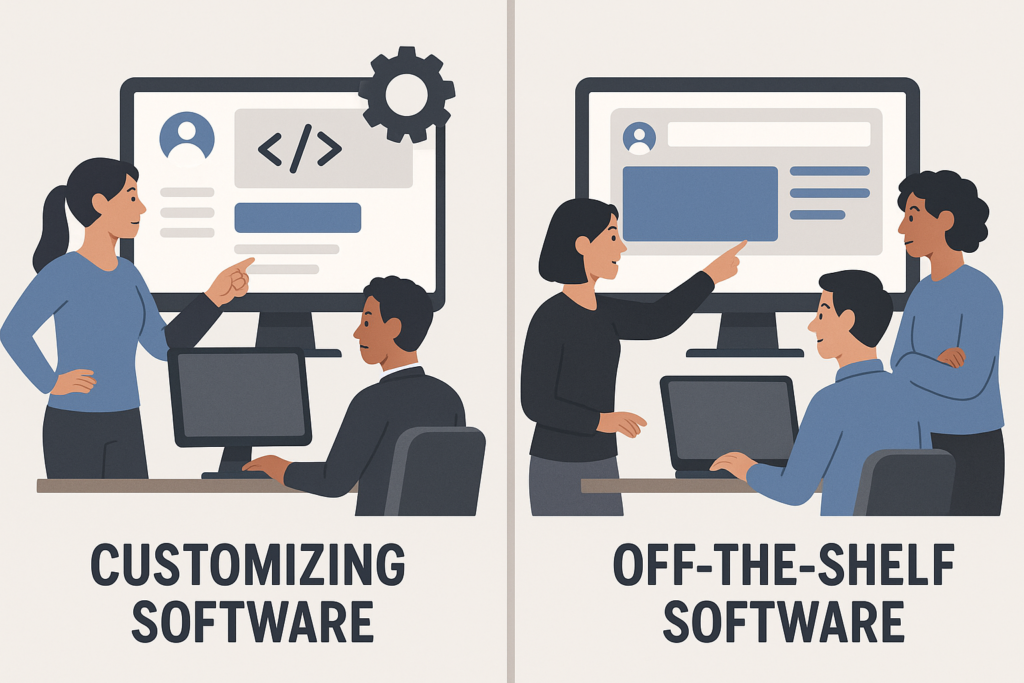
Before diving into the pros and cons, it’s important to define the two types of software. Custom software is built specifically for your business, tailored to your unique processes and requirements. In contrast, off-the-shelf software is a ready-made product designed to serve a wide range of businesses with similar needs.
Key Differences: Custom Software vs Off-the-Shelf
For example, here are the main ways these solutions differ:
- Customization: Custom software is built around your workflow, while off-the-shelf solutions offer standard features.
- Implementation: Off-the-shelf software can be deployed quickly. Meanwhile, custom software requires a development period.
- Cost: Upfront costs are usually higher for custom solutions, but off-the-shelf may require ongoing license fees.
- Scalability: Custom software can grow with your business. However, off-the-shelf products may have limitations as you expand.
- Support and Updates: Off-the-shelf vendors manage updates and support. With custom software, you control the update schedule, but must handle maintenance.
For a deeper dive into off-the-shelf benefits and drawbacks, visit our guide: Off-the-Shelf Software: Pros, Cons & Business Fit.
Advantages of Custom Software
Because every business is unique, custom software can be a powerful investment. Here’s why:
- Tailored Fit: Custom solutions are designed exclusively for your business processes, ensuring a perfect match.
- Competitive Edge: Unique features and workflows can help you stand out in your industry.
- Integration: Custom software can connect seamlessly with your existing systems and tools.
- Scalability: As your business grows, you can add features or users without changing platforms.
- Ownership: You have full control over updates, data, and intellectual property.
However, it’s important to remember that custom software requires a significant investment of time and resources. The development process involves careful planning, collaboration, and ongoing maintenance.
Benefits of Off-the-Shelf Software
For many businesses, off-the-shelf solutions offer practical advantages. For example:
- Faster Deployment: These products are ready to use, allowing you to get up and running quickly.
- Lower Initial Cost: Upfront expenses are typically lower than custom development.
- Reliability: Established vendors provide regular updates, support, and security patches.
- Proven Features: Off-the-shelf tools are built on industry best practices and tested by many users.
- Scalability Options: Many solutions offer tiered pricing or add-ons as your needs grow.
That said, off-the-shelf software may not meet all your requirements. You might need to adjust your workflows to fit the product, or invest in additional licenses and modules as your business evolves.
To explore when off-the-shelf is the right choice, check out our article: Off-the-Shelf Software: Pros, Cons & Business Fit.
When to Choose Custom Software
Deciding between custom software vs off-the-shelf often comes down to your business goals. Consider custom software if:
- You have unique processes that standard solutions cannot support.
- Your industry requires strict compliance or advanced security.
- You want to automate complex workflows specific to your business.
- Integrating with existing systems is essential.
- You plan to scale rapidly and need a flexible solution.
In other words, custom software is best when you need control, flexibility, and a competitive advantage.
When Off-the-Shelf Solutions Make Sense
At the same time, off-the-shelf software is ideal when:
- You need a solution quickly and have a limited budget.
- Your requirements are standard and align with industry norms.
- You want minimal maintenance responsibilities.
- Your team is familiar with widely used platforms.
- Scalability needs are moderate and can be met with available plans.
Moreover, off-the-shelf products are often the best starting point for small businesses or those testing new ideas. For further insights, read Custom Software vs Off-the-Shelf Software: Which Is Better for Your Business?.
Cost Comparison: Custom vs Off-the-Shelf
Next, let’s look at the financial side. Custom software generally involves higher upfront costs for design, development, and deployment. However, you may save money over time by avoiding recurring license fees and costly workarounds.
In contrast, off-the-shelf software offers a lower entry price. Yet, costs can add up through subscriptions, additional modules, or user licenses as your needs change.
- Custom Software: High initial investment, lower ongoing costs, long-term value.
- Off-the-Shelf: Low initial cost, potential for increasing recurring fees.
Therefore, it’s crucial to consider not just the purchase price, but the total cost of ownership over several years.
Scalability and Flexibility
As your business grows, your software must adapt. Custom solutions are built with scalability in mind, allowing you to add features or users as needed. Meanwhile, off-the-shelf products may require you to upgrade to more expensive plans or switch platforms entirely.
Because of this, businesses with ambitious growth plans often benefit more from custom development.
Integration and Compatibility
For example, if your business relies on multiple systems—such as CRM, ERP, and e-commerce platforms—custom software can connect these tools seamlessly. Off-the-shelf products might offer integrations, but they may not cover every use case or may require third-party add-ons.
In addition, custom solutions give you full control over data flows and security protocols.
Maintenance and Support
With off-the-shelf software, vendors handle updates, bug fixes, and security patches. This can reduce your IT burden. However, you may have less control over when changes are made, or how quickly issues are resolved.
With custom software, you decide when to update and how to prioritize support. That said, you’re also responsible for ongoing maintenance, which requires in-house expertise or a reliable development partner.
Making the Right Choice for Your Business
Finally, choosing between custom software vs off-the-shelf requires a careful analysis of your business needs, budget, and long-term goals. Here are a few steps to guide your decision:
- Assess Your Needs: Identify critical features and workflows.
- Evaluate Your Budget: Consider both upfront and ongoing costs.
- Think Long-Term: Plan for growth, integrations, and future requirements.
- Consult Stakeholders: Involve team members who will use the software daily.
- Compare Solutions: Research available products and speak with vendors or developers.
Moreover, you can learn more about how to match software with your business from our related guides on off-the-shelf software pros and cons and custom vs off-the-shelf software.
Frequently Asked Questions
What are the main differences between custom software and off-the-shelf software?
Custom software is tailored to your specific business needs, offering flexibility and control, while off-the-shelf software is pre-built and ready to use but may lack customization.
When should a business choose custom software over off-the-shelf solutions?
Businesses should choose custom software when they require unique features, integration with existing systems, or want to gain a competitive advantage through tailored workflows.
How do the costs of custom software compare to off-the-shelf software?
Custom software typically involves higher upfront development costs but can offer better long-term value, whereas off-the-shelf software usually has lower initial costs but may incur additional expenses for licenses and limited scalability.
Can off-the-shelf software meet the needs of small businesses?
Yes, off-the-shelf software can be a great starting point for small businesses with standard requirements, offering quick deployment and cost efficiency.
Conclusion: Which Is Better for Your Business?
In conclusion, the choice between custom software vs off-the-shelf depends on your specific needs, budget, and vision for growth. Custom solutions deliver flexibility, integration, and a competitive edge, while off-the-shelf products offer speed, affordability, and reliability. By carefully weighing the pros and cons, you can select the software that will drive your business forward.
For more guidance on software selection, explore our in-depth resources on off-the-shelf software and custom vs off-the-shelf solutions.
Image suggestions: Comparison charts, workflow diagrams, team collaboration photos, screenshots of business software dashboards.
Leave a Reply