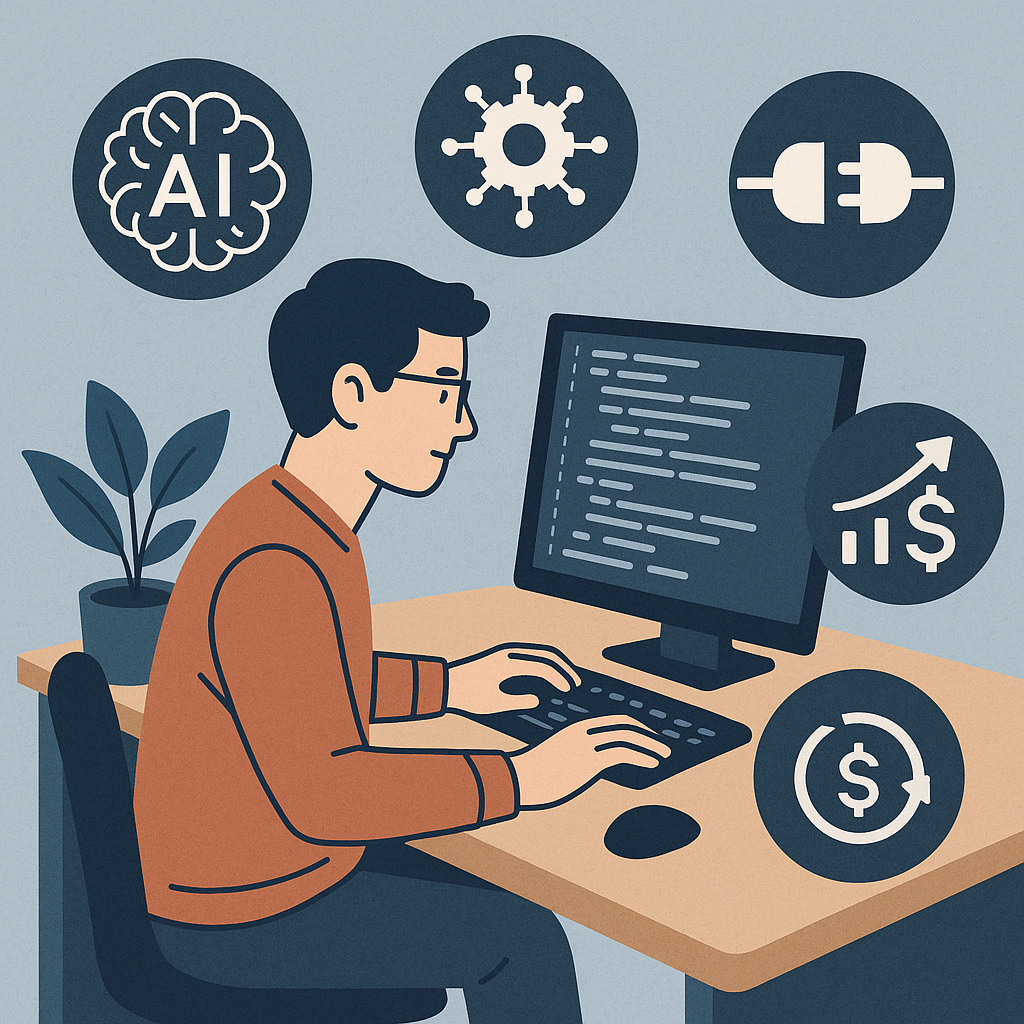
In today’s tech-driven landscape, understanding custom software pricing is essential for businesses planning to invest in tailored digital solutions. However, development costs have shifted considerably in recent years. Therefore, exploring the latest pricing trends can help you budget wisely and choose the right approach for your project.
Moreover, if you are evaluating whether custom or off-the-shelf software suits your needs, check out our detailed guide on the Difference Between Off-the-Shelf and Bespoke Software for Beginners.
Current Trends Affecting Custom Software Pricing
First, it’s important to recognize that several evolving trends are shaping how much custom software development costs today. For example, the integration of advanced technologies like artificial intelligence (AI) and machine learning has become more common, adding complexity and cost.
At the same time, clients increasingly demand highly personalized features and seamless integrations with existing systems. These requirements often extend project timelines and increase resource needs.
Finally, the shift toward cloud-native architectures and mobile-first designs also influences pricing, as these approaches require specialized skills and testing efforts.
1. AI and Automation Integration
Because of this growing demand, incorporating AI tools, chatbots, or automation workflows drives development costs upward. These features require expertise in data handling, model training, and continuous optimization.
In addition, AI-powered dashboards and analytics add value but increase design and backend complexity.
2. Increased Project Complexity
Next, many custom software projects now involve complex user roles, multi-layered security, and real-time data processing. As a result, developers need more time to build and test these functionalities thoroughly.
Moreover, compliance with industry regulations (such as GDPR or HIPAA) can add further layers of development and documentation.
3. Demand for Seamless Integrations
Custom software often must connect smoothly with other applications, such as CRMs, ERPs, or payment gateways. Therefore, integration complexity directly impacts pricing.
For instance, integrating with legacy systems or multiple third-party APIs can be time-consuming and require custom adapters.
4. User Experience and Design Expectations
Also, modern users expect intuitive, responsive interfaces across devices. Consequently, investing in UI/UX design and frontend development raises costs but improves user satisfaction.
That said, balancing design quality with budget constraints is crucial for project success.
Key Factors Driving Development Costs Today
To make this easier, let’s break down the main elements influencing custom software pricing:
- Project Size and Scope: Larger projects with broad functionality naturally cost more than smaller, focused apps.
- Feature Complexity: Advanced features like AI, real-time updates, or multi-user capabilities increase development time.
- Technology Stack: Using cutting-edge or specialized technologies may require expert developers, impacting rates.
- Integration Requirements: Connecting with other software or hardware raises complexity and testing efforts.
- Customization Level: The more tailored the solution, the higher the design and coding efforts.
- Support and Maintenance: Ongoing updates, bug fixes, and feature enhancements add to the total cost over time.
For a deeper dive into these drivers, you can visit our post on Key Factors Driving Up Custom Software Development Costs.
How Custom Software Pricing Compares to Off-the-Shelf Solutions
In contrast to custom development, off-the-shelf software typically features fixed pricing and limited customization. This option suits businesses needing quick deployment and standard features.
However, if your business requires unique workflows or integration, custom software offers tailored solutions that off-the-shelf products cannot match.
That said, you can learn more about the benefits and drawbacks of off-the-shelf software by reading Off-the-Shelf Software Explained: Benefits, Drawbacks & Fit.
Tips for Estimating Custom Software Development Costs
Estimating costs accurately can be challenging, but several steps can help you get a clearer picture:
- Define Your Project Scope: Clearly outline features, user roles, and integrations needed.
- Choose Your Technology Stack: Decide on platforms, programming languages, and tools.
- Consult With Experts: Engage developers or agencies to get detailed quotes and timelines.
- Plan for Ongoing Support: Budget for maintenance and updates beyond initial launch.
For a comprehensive guide on managing rising costs, see our article on Explaining the Surge in Custom Software Pricing.
Frequently Asked Questions
What factors influence custom software pricing?
Custom software pricing depends on project size, required features, design complexity, integrations, user roles, automation, and inclusion of AI tools or advanced dashboards.
Why is custom software development cost rising?
Costs are increasing due to factors like AI integration, higher project complexity, advanced feature requirements, and evolving technology standards.
How can I estimate the cost of custom software development?
Estimate costs by evaluating project scope, feature set, technology stack, integrations, and required support. Consulting with experts can provide more accurate quotes.
What is the difference between custom software pricing and off-the-shelf software pricing?
Custom software pricing is based on tailored development needs and complexity, while off-the-shelf software has fixed pricing and limited customization.
In conclusion, staying informed about custom software pricing trends empowers businesses to make smarter investment decisions. By understanding what drives costs today, you can better plan your project and achieve the best value.
For expert software solutions tailored to your business goals, visit XoBytes Expert Software Solutions.
Leave a Reply