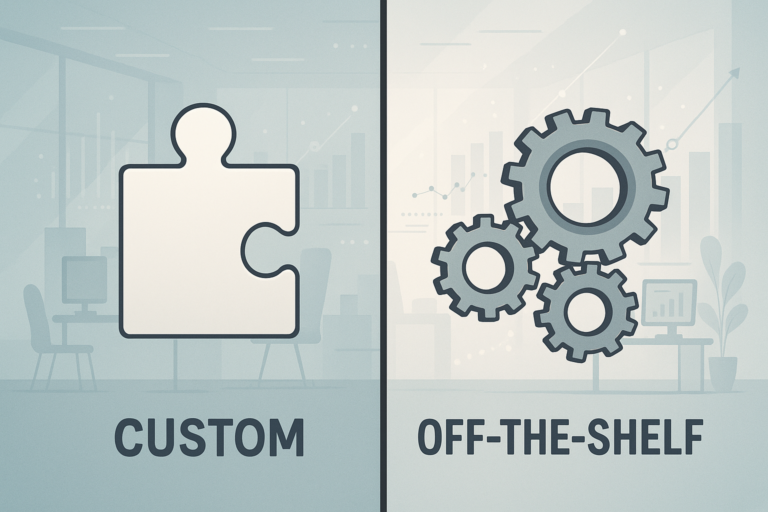
Choosing between custom build software vs off-the-shelf solutions is a critical decision for any business. Because technology directly impacts efficiency, growth, and competitive advantage, making the right choice can define your company’s future success. In this guide, we’ll help you understand the key differences, weigh the pros and cons, and decide which type of software best fits your business needs.
Understanding the Basics: Custom Build Software vs Off-the-Shelf
Before diving into the comparison, it’s important to clarify what each solution means. Custom build software is developed specifically for your business, tailored to your workflows and goals. In contrast, off-the-shelf software is a standardized product available to a wide range of users, offering general features designed to solve common problems.
Custom Build Software
- Developed to address your unique business needs
- Flexible and scalable as your organization grows
- Integrates with your existing systems and processes
- Can provide a competitive advantage
Off-the-Shelf Software
- Pre-built and ready for immediate use
- Lower upfront cost and faster deployment
- Typically supported and updated by the vendor
- Widely used across industries
Key Differences: Custom Build Software vs Off-the-Shelf
To make a well-informed decision, you need to understand the main differences between these two types of software. For example, consider the following factors:
1. Cost
First, let’s talk about cost. Off-the-shelf software often has a lower initial price, as it is mass-produced and sold to many customers. However, ongoing subscription fees and licensing costs can add up over time. In contrast, custom build software requires a larger upfront investment, but it may reduce operational costs in the long run by streamlining your unique processes.
For a deeper look at custom software costs, visit How Much Does Custom Software Development Cost?
2. Customization and Flexibility
With off-the-shelf solutions, customization options are often limited. You may need to adjust your business processes to fit the software, rather than the other way around. Meanwhile, custom build software is designed around your needs, offering full flexibility and the ability to adapt as your business evolves.
3. Implementation Time
Off-the-shelf software can be deployed quickly, sometimes in just a few days or weeks. Because custom build software is crafted from scratch, it usually takes several months to design, develop, and test. However, the extra time can result in a solution that fits your business perfectly.
4. Integration with Existing Systems
Next, consider integration. Off-the-shelf products may not always play nicely with your current systems, creating data silos or manual workarounds. In contrast, custom software can be built to integrate seamlessly with your existing tools, improving efficiency across your organization.
5. Support and Updates
With off-the-shelf solutions, support is provided by the vendor and updates are released for all users. While this can be convenient, you may have to wait for new features or bug fixes. Custom build software offers tailored support and the flexibility to prioritize updates based on your business’s needs.
Pros and Cons: Custom Build Software
To make this easier, let’s break down the main advantages and disadvantages of custom build software:
- Pros:
- Tailored to your exact requirements
- Scalable and adaptable as you grow
- Competitive differentiation
- Ownership of the solution and intellectual property
- Enhanced security and compliance controls
- Cons:
- Higher upfront cost
- Longer development timeline
- Requires ongoing maintenance and updates
- Potential risks if your development partner lacks experience
For more on the benefits, see What Is Custom Build Software? Key Benefits for Modern Businesses.
Pros and Cons: Off-the-Shelf Software
Meanwhile, off-the-shelf software comes with its own set of strengths and limitations:
- Pros:
- Lower upfront investment
- Quick setup and deployment
- Vendor-provided updates and support
- Proven track record and reliability
- Cons:
- Limited customization
- May include unnecessary features
- Potential integration challenges
- Ongoing subscription or licensing costs
- Less control over updates or roadmap
How to Decide: Key Questions to Ask
Before making your choice, you should reflect on your business’s priorities. To help, ask yourself these questions:
- What are my business’s unique requirements?
- How quickly do I need the solution implemented?
- What is my total budget, including long-term costs?
- Do I need deep integration with existing systems?
- How important is scalability for future growth?
- What level of control and customization do I require?
- What are the security and compliance needs of my industry?
By answering these questions, you can clarify which solution aligns best with your goals.
When to Choose Custom Build Software
Custom build software is ideal when your business has unique workflows, compliance requirements, or integration needs that generic solutions can’t meet. For example, if you operate in a niche industry or require specialized features, custom development may be the only way to achieve your objectives. Additionally, companies seeking a distinct competitive edge often find custom solutions invaluable.
To learn more about custom build software, check out Custom Build Software Explained: When and Why Your Business Needs It.
When to Choose Off-the-Shelf Software
On the other hand, off-the-shelf software is best when your needs are standard, your budget is limited, or you need a solution up and running quickly. These products often suit startups, small businesses, or companies with well-defined, common processes. Furthermore, if you prefer predictable costs and regular updates without the hassle of ongoing development, off-the-shelf is a strong option.
Comparing Use Cases: Real-World Examples
To illustrate, let’s look at two scenarios:
- Scenario 1: Custom Build Software – A logistics company needs a platform that integrates GPS, custom reporting, and real-time driver data. Off-the-shelf solutions fall short, so they invest in a custom application to streamline operations and support growth.
- Scenario 2: Off-the-Shelf Software – A small retail store needs a POS system and basic inventory management. Here, a widely available off-the-shelf solution provides all necessary features at a low monthly cost and is ready to use immediately.
Checklist: Choosing the Right Solution
To make your decision easier, use this checklist:
- Define your core business needs and goals
- Assess your available budget and timeline
- Evaluate required integrations and customization
- Consider future scalability and flexibility
- Review security and compliance requirements
- Weigh the pros and cons of each option
- Consult with stakeholders and technology experts
Integration Considerations
Integration is a critical factor in your decision. Because off-the-shelf solutions may not always integrate smoothly with your existing tools, you could face data silos or manual processes. In contrast, custom build software can be designed to connect seamlessly with your current systems, supporting automation and efficiency.
Scalability and Future-Proofing
As your business grows, your software needs will evolve. Off-the-shelf solutions may become limiting if they can’t scale or adapt to new requirements. Meanwhile, custom build software can be updated and expanded to support your future goals, helping your organization stay agile and competitive.
Support and Maintenance
Support is another important consideration. With off-the-shelf software, you rely on the vendor for updates and troubleshooting. Custom build software gives you more control, but also places responsibility for maintenance on your team or partner. Therefore, you should plan for ongoing support and updates regardless of your choice.
Making the Final Decision
Ultimately, the choice between custom build software vs off-the-shelf comes down to your business’s unique situation. For some, the flexibility and long-term value of custom solutions outweigh the upfront investment. For others, the speed and affordability of off-the-shelf software are a better fit.
If you need help evaluating your options, consult with technology experts who understand your industry. They can help you map out requirements, estimate costs, and identify the best path forward.
Frequently Asked Questions
- What is the main difference between custom build software and off-the-shelf software?
Custom build software is tailored to your specific business needs and processes, while off-the-shelf software is a ready-made, general solution designed for a broad audience. - When should a business consider custom build software?
Businesses should consider custom build software when they have unique workflows, require specific integrations, or need a competitive edge that standard solutions cannot provide. - Is off-the-shelf software more cost-effective than custom build software?
Off-the-shelf software usually has a lower upfront cost, but custom build software can offer better long-term value if your business has specialized needs. - How long does it take to develop custom build software?
Development time for custom build software varies based on complexity, but it typically takes several months from planning to deployment. - Can off-the-shelf software be customized for my business?
Many off-the-shelf solutions offer some customization options, but they may not fully adapt to your unique requirements.
Conclusion: Custom Build Software vs Off-the-Shelf
In summary, deciding between custom build software vs off-the-shelf is a strategic choice that impacts your business’s efficiency, scalability, and long-term success. Consider your unique needs, budget, and growth plans before making your decision. For more insights on custom software, read What Is Custom Build Software? Key Benefits for Modern Businesses. If you’re ready to explore your options, reach out to a trusted technology partner for expert guidance.
Image suggestion: Comparison table or infographic illustrating key differences between custom build software and off-the-shelf solutions.