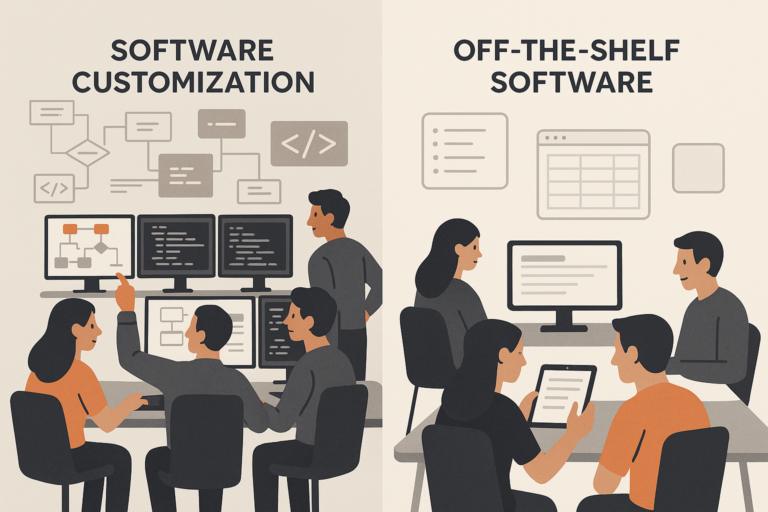
In today’s business landscape, technology plays a central role in driving efficiency and growth. However, not all software solutions are created equal. Many companies find themselves weighing the pros and cons of custom made software versus off-the-shelf solutions. Understanding how custom made software differs from off-the-shelf solutions is essential for making the right technology investment for your business.
What Is Custom Made Software?
First, let’s define custom made software. Custom made software refers to applications or systems designed and built specifically for a particular business or organization. Unlike generic software, these solutions are tailored to address unique processes, workflows, and goals.
For example, a logistics company might need a tracking system that integrates with its existing operations and supports specific reporting needs. In this case, custom software can deliver exactly what is required, whereas off-the-shelf options may fall short.
What Are Off-the-Shelf Software Solutions?
Meanwhile, off-the-shelf software (also known as commercial or packaged software) is developed for a broad audience. These products offer standard features designed to satisfy the needs of many different businesses or users. Common examples include accounting programs, project management tools, and CRM systems.
Because off-the-shelf software is mass-produced, it is generally quicker to deploy and less expensive upfront. However, it might not fit every business perfectly.
Key Differences Between Custom Made and Off-the-Shelf Software
To make this comparison easier, let’s break down the main differences between these two approaches:
- Customization: Custom made software is built from the ground up to match your exact needs. In contrast, off-the-shelf solutions offer a set of features designed for a wide range of users.
- Integration: Because custom solutions are tailored, they can integrate seamlessly with your existing systems. Off-the-shelf products may require extra workarounds or third-party plugins for integration.
- Scalability: With custom software, you can scale and add new features as your business grows. Off-the-shelf options may have limitations or require costly upgrades.
- Ownership and Control: Custom software gives you full ownership, so you decide how it evolves. Off-the-shelf products are controlled by the vendor, which can limit your flexibility.
- Cost: Initially, custom development can be more expensive and time-consuming. However, it can reduce ongoing costs by eliminating license fees and increasing efficiency. Off-the-shelf software is usually cheaper upfront but may incur recurring fees and costs for customization.
- Support and Updates: Custom solutions are supported by your development team or partner. Off-the-shelf software relies on vendor support, which may not always align with your business priorities.
Advantages of Custom Made Software for Businesses
Because every business is unique, custom made software can offer significant benefits:
- Tailored Fit: Custom software addresses your specific processes and goals, so you avoid unnecessary features and complexity.
- Improved Efficiency: By automating tasks and streamlining workflows, custom solutions can boost productivity and reduce errors.
- Competitive Advantage: With software designed around your strengths, you can differentiate your business in the market.
- Better Integration: Custom systems work seamlessly with your existing software, reducing data silos and manual work.
- Scalability: As your business evolves, your software can adapt—supporting growth and changing needs.
For a deeper dive into tailored solutions, see Custom Made Software Explained: Tailored Solutions for Your Business Needs.
When Should You Choose Custom Made Software?
Deciding between custom and off-the-shelf solutions depends on your organization’s goals, processes, and challenges. Therefore, consider custom software if:
- Your business has unique workflows that standard software can’t support.
- You need to integrate multiple systems or automate complex processes.
- Off-the-shelf solutions require expensive customizations or ongoing workarounds.
- You want full control over your software’s features, data, and updates.
- Scalability and adaptability are important as your business grows.
In contrast, off-the-shelf solutions may be suitable if your needs are common, your budget is tight, or you need a quick deployment.
Examples of Custom Made Software Applications
To illustrate, here are some common scenarios where custom software delivers value:
- Healthcare: Custom patient management systems that comply with regulatory standards and integrate with hospital equipment.
- Retail: Bespoke inventory and point-of-sale systems tailored to unique product lines and customer experiences.
- Manufacturing: Automated workflow solutions that track production, manage supply chains, and provide real-time analytics.
- Finance: Secure platforms for managing transactions, compliance, and customer data.
Because these industries have specific needs, custom software enables greater efficiency and compliance.
Cost Considerations: Custom Made vs. Off-the-Shelf
Cost is a major factor in any technology decision. While custom made software requires a higher initial investment, it can lead to savings over time. For example, you avoid recurring license fees and reduce manual labor costs by automating tasks.
Off-the-shelf solutions often appear more affordable at first. However, hidden costs—such as customization, integration, and support—can add up. Moreover, if standard software does not fully meet your needs, you may face productivity losses or have to invest in additional tools.
Therefore, it’s important to evaluate total cost of ownership, not just upfront expenses. Consider long-term value, business impact, and scalability.
How Custom Software Development Improves Business Efficiency
Custom software can transform your business by streamlining operations and supporting innovation. For example, you can automate repetitive tasks, reduce errors, and gain real-time insights into your processes. As a result, your team can focus on higher-value activities and respond to market changes faster.
Additionally, custom solutions can support business automation, enabling you to deliver better customer experiences and scale operations smoothly.
Potential Challenges of Custom Made Software
While custom software offers many advantages, there are also challenges to consider:
- Development Time: Building a custom solution takes longer than installing off-the-shelf software.
- Initial Cost: Upfront investment is higher, though this can be offset by long-term savings.
- Vendor Dependence: You rely on your development partner for ongoing support and updates.
- Project Management: Custom projects require clear requirements, communication, and stakeholder involvement.
That said, choosing the right software development partner can help you navigate these challenges and ensure a successful outcome.
Checklist: Choosing the Right Software Solution
To help decide between custom made and off-the-shelf software, consider these questions:
- What are your core business needs and goals?
- Do existing solutions meet your requirements, or are you making compromises?
- How important is integration with your current systems?
- What is your budget for software and ongoing support?
- How quickly do you need to deploy the solution?
- Are you planning to scale or change your processes in the near future?
By answering these questions, you can make a more informed decision and select the right path for your business.
Frequently Asked Questions
- What is custom made software? Custom made software is software specifically developed to meet the unique requirements of a business, rather than using generic off-the-shelf solutions.
- How does custom made software benefit businesses? It provides tailored functionality, better integration with existing systems, improved efficiency, and scalability aligned with specific business processes.
- When should a business consider custom made software? When off-the-shelf software does not fully meet operational needs, requires costly workarounds, or when unique workflows and competitive advantages are needed.
- How is custom made software different from off-the-shelf software? Custom software is built for specific business needs with unique features, while off-the-shelf software offers general features designed for a broad user base.
Conclusion: Making the Right Choice for Your Business
Ultimately, understanding how custom made software differs from off-the-shelf solutions empowers you to make technology decisions that align with your business strategy. While off-the-shelf software can be a fast and affordable choice for common needs, custom made solutions offer the flexibility, integration, and competitive edge that many organizations require.
As you evaluate your options, consider your long-term goals, budget, and the unique challenges your business faces. For more insights on tailored software and its impact, visit Custom Made Software Explained: Tailored Solutions for Your Business Needs.
Ready to explore custom software for your business? Reach out to an expert for a personalized consultation and discover how the right technology can drive your success.