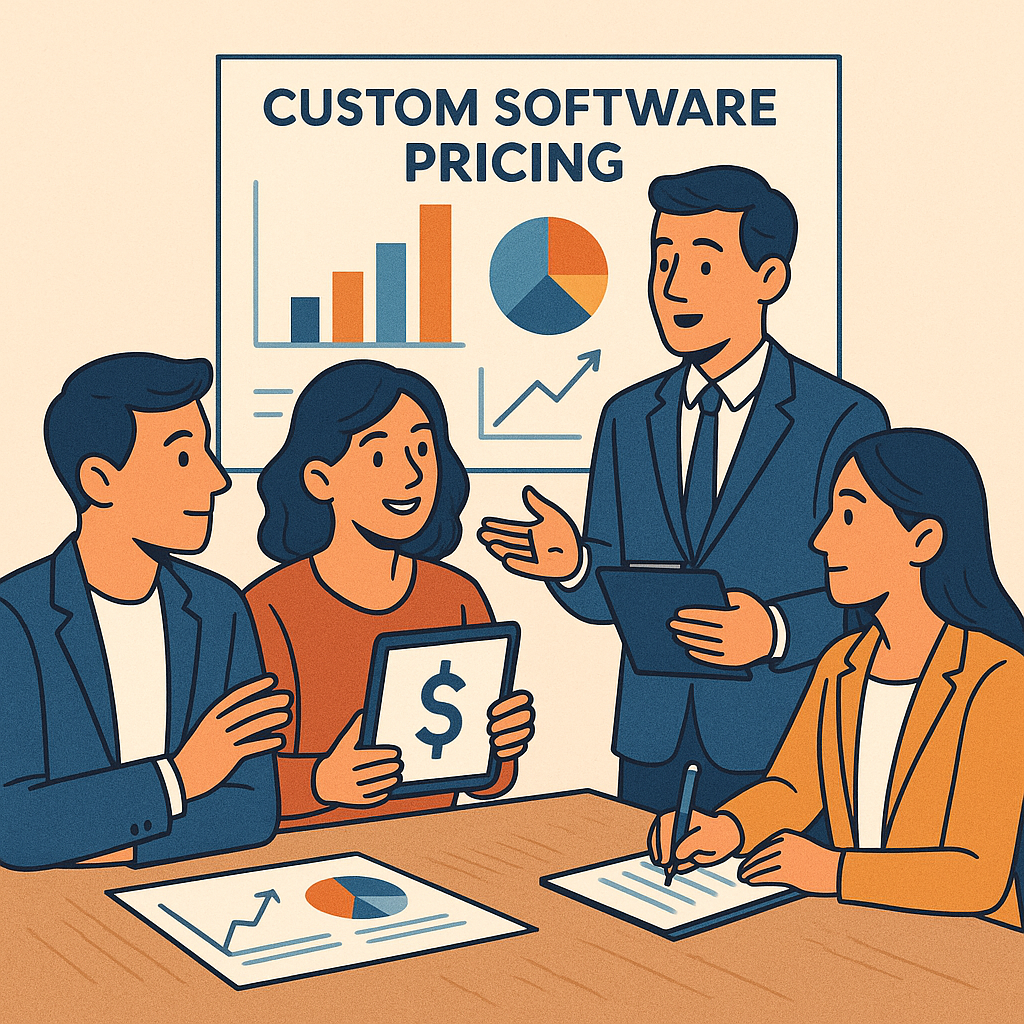
When planning a new software project, understanding custom software pricing is crucial. Many businesses ask, “How much will my project cost?” Although the answer depends on various factors, this guide will help you navigate the pricing landscape and estimate your budget effectively. Moreover, early insights into costs can save time and resources during development.
Also, if you’re considering whether to build custom software or choose an off-the-shelf solution, knowing pricing differences is essential. For a detailed comparison, check out our post on Custom Software vs Off-the-Shelf Software: Key Differences & Examples.
What Is Custom Software Pricing?
Custom software pricing refers to the total cost you pay to develop a tailored software solution designed specifically for your business needs. This includes not only the development work but also design, testing, deployment, and ongoing maintenance. In contrast, the development cost often refers just to the coding aspect of the project.
Therefore, it’s important to understand that pricing covers a broader scope than just writing code. For more insights, our article on Custom Software Pricing vs Development Cost Explained is a helpful resource.
Key Factors That Affect Custom Software Pricing
Several elements influence how much your custom software project will cost. To make this easier, here are the main factors to consider:
- Project Size and Complexity: Larger projects with complex workflows and many features naturally require more time and effort, increasing costs.
- Required Features: The number and sophistication of features directly impact pricing. For example, integrating user roles, automation, or AI components will add to the cost.
- Design Requirements: Custom user interfaces, responsive designs, and branding add to development time and cost.
- Integrations: Connecting your software to other systems or APIs can be complex and expensive depending on the technology involved.
- Technology Stack: The choice of programming languages, frameworks, and platforms affects both development speed and cost.
- Maintenance and Support: Ongoing updates, bug fixes, and customer support are part of the total pricing.
Because of this, it’s wise to define your project scope clearly before requesting quotes from developers. For a detailed breakdown of cost factors, see our How Much Does Custom Software Development Cost? Pricing Guide.
How to Estimate Your Custom Software Project Cost
Estimating custom software pricing starts with a clear understanding of your business needs and project scope. First, list out the features you require and prioritize them. Next, consider the design complexity and any necessary integrations.
Then, choose the technology stack that aligns with your goals and budget. Finally, factor in maintenance and potential future enhancements. At the same time, consulting with experienced developers can provide realistic estimates based on similar projects.
Also, keep in mind that project timelines directly affect pricing. Shorter deadlines may increase costs due to the need for additional resources.
Custom Software vs Off-the-Shelf Software Pricing
Many businesses wonder if custom software is more expensive than off-the-shelf options. Generally, custom software has higher upfront costs because it is built from scratch to meet your unique needs. However, it often results in better efficiency and scalability, which can save money in the long run.
In contrast, off-the-shelf software has lower initial costs but may require costly workarounds or additional tools to fit your business processes. For a deeper comparison, visit our post on Workflow Solutions: Custom App Development vs Off-the-Shelf Software.
Tips to Manage Custom Software Pricing
To keep your project within budget, consider these tips:
- Define clear requirements: Avoid scope creep by having detailed specifications before development starts.
- Prioritize features: Focus on essential features first and plan additional ones for later phases.
- Choose the right development partner: Experienced developers can optimize costs without compromising quality.
- Plan for maintenance: Budget for ongoing support to keep your software running smoothly.
Moreover, you can explore flexible plans such as the XBS Pro Plan or XBS Pro Plus Plan for scalable software solutions that may complement your custom development needs.
Frequently Asked Questions
What factors affect the cost of custom software development?
Cost depends on project size, complexity, required features, design, integrations, user roles, automation, and inclusion of AI tools or advanced dashboards.
How can I estimate the cost of custom software development?
Estimate by defining project scope, required features, design complexity, technology stack, and any integrations or AI components needed.
Is custom software development more expensive than off-the-shelf software?
Generally yes, custom software tends to have higher upfront costs but offers tailored solutions that can save money long-term compared to generic off-the-shelf options.
Why is there a difference between custom software pricing and development cost?
Pricing includes all project expenses including design, testing, and maintenance, while development cost often refers just to coding and technical build.
In conclusion, understanding custom software pricing helps you plan your project wisely and choose the best solution for your business. For more detailed insights, consider visiting our comprehensive guide on How Much Does Custom Software Development Cost? Pricing Guide.
Leave a Reply