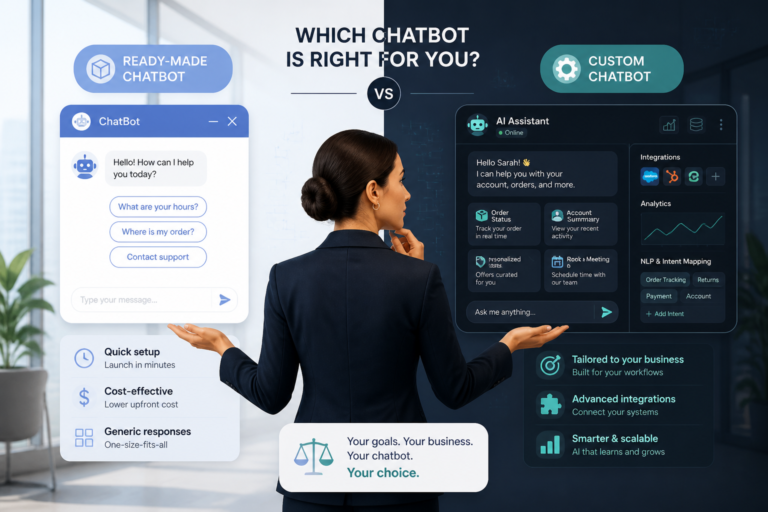
Chatbots have become integral to enhancing customer engagement and streamlining operations in today’s business landscape. However, when it comes to choosing the right type of chatbot, business owners often face a critical decision: should they opt for a ready-made or a custom solution? In this article, we will explore how to decide between ready-made and custom chatbots for your business needs.
Understanding Chatbots
Before diving into the specifics of ready-made and custom chatbots, it’s essential to understand what chatbots are and how they function. A chatbot is a software application that uses artificial intelligence (AI) to simulate human conversation. They can assist users in various ways, from answering queries to facilitating transactions. As a result, businesses are increasingly adopting chatbots to improve customer service and operational efficiency.
Ready-Made Chatbots
Ready-made chatbots, also known as off-the-shelf chatbots, are pre-built solutions that can be deployed quickly. These chatbots come with predefined functionalities and are generally less expensive than custom solutions. However, they may not fully meet the unique needs of every business.
For useful background on this topic, see Off-the-Shelf vs Custom Chatbots: Choosing the Best for Your Business.
Advantages of Ready-Made Chatbots
- Quick Deployment: Ready-made chatbots can be installed and operational within a short timeframe, allowing businesses to start engaging with customers almost immediately.
- Lower Initial Costs: These solutions typically have lower upfront costs, making them accessible for small to medium-sized businesses.
- Proven Solutions: Many ready-made chatbots have been tested and refined over time, ensuring reliability and effectiveness.
Disadvantages of Ready-Made Chatbots
- Limited Customization: These chatbots may not offer the flexibility needed to cater to specific business processes or customer interactions.
- Ongoing Costs: While the initial investment may be low, businesses often face ongoing licensing or subscription fees.
- Scalability Issues: As a business grows, the limitations of a ready-made chatbot may necessitate a switch to a more customizable solution.
Custom Chatbots
Custom chatbots, on the other hand, are tailored solutions designed to meet the specific needs of a business. They offer greater flexibility and can be integrated into existing workflows more seamlessly.
Advantages of Custom Chatbots
- Tailored Solutions: Custom chatbots can be developed to address unique business processes, ensuring a better fit for specific needs.
- Greater Scalability: These chatbots can evolve as your business grows, adapting to new requirements without the need for a complete overhaul.
- Enhanced User Experience: A custom chatbot can provide a more personalized experience for users, improving customer satisfaction and engagement.
Disadvantages of Custom Chatbots
- Higher Initial Costs: The development of a custom chatbot typically requires a more significant upfront investment compared to off-the-shelf solutions.
- Longer Development Time: Custom chatbots require more time to design, develop, and deploy, which may delay your ability to engage with customers.
- Maintenance and Support: Ongoing maintenance and updates may require dedicated resources, adding to long-term costs.
Factors to Consider When Choosing a Chatbot
When deciding between ready-made and custom chatbots, several factors should be taken into account:
- Business Size: Larger businesses with complex needs may benefit more from custom solutions, while smaller businesses might find ready-made options sufficient.
- Budget: Consider both initial and ongoing costs. A ready-made solution might be more affordable initially, but a custom chatbot could offer better long-term value.
- Time to Market: If you need to deploy a solution quickly, a ready-made chatbot may be the better choice.
- Specific Needs: Evaluate whether your business has unique processes that require a tailored approach.
To make this decision easier, it’s beneficial to conduct a thorough analysis of your business requirements. This analysis can guide you in determining which type of chatbot aligns best with your operational goals.
Integration with Existing Systems
Another critical aspect to consider is how well the chatbot integrates with your existing systems. Ready-made chatbots may have limited integration capabilities, while custom chatbots can be designed to work seamlessly with your current software and processes. This integration can enhance efficiency and improve the overall user experience.
For a practical companion to this section, explore Custom Made Software Explained: Tailored Solutions for Your Business Needs.
Related XoBytes Products

Agentic Consultant, Product Rep, & Customer Service Agent By XoBytes.com
$19.99
Agentic Consultant for WordPress gives your website a smart AI product rep, customer service agent, and hands-free voice…
Agentic Construction Theme | More than just a theme | Built for all trades
$49.99
Why You Need This Theme And Plugin! Click here for the Demo Agentic Construction Theme by XoBytes is…
Agentic Support Desk for WordPress by XoBytes.com
$19.99
Agentic Support Desk by Xobytes is an AI-powered WordPress support desk built for software sellers, WooCommerce stores, agencies,…

Agent Shield by XoBytes | Protect against agentic software
$25.00
AgentShield is a WordPress AI Agent Firewall that helps detect, monitor, block, and temporarily ban AI crawlers, AI…
Tamper Guard by XoBytes | WordPress Plugin Tamper Detector
$25.00
Protect your commercial WordPress plugins with license-based tamper detection, file integrity monitoring, automatic shutdown protection, and site reporting.…
Product 1 of 6
Conclusion
Ultimately, the choice between ready-made and custom chatbots depends on your business needs, budget, and growth plans. Ready-made chatbots offer quick deployment and lower costs, making them suitable for businesses with straightforward needs. On the other hand, custom chatbots provide tailored solutions that can scale with your business, albeit at a higher initial investment.
As you weigh your options, consider the long-term benefits of each type of chatbot. If you anticipate significant growth or have specific requirements, investing in a custom solution may be the best path forward.
Implementation Steps for Chatbots
Whether you choose a ready-made or custom chatbot, there are essential steps to follow for successful implementation. Here’s a guide to help you navigate the process:
Continue with Choosing Between Off-the-Shelf and Custom Chatbots for additional XoBytes guidance.
- Define Your Objectives: Start by identifying what you want to achieve with the chatbot. Is it customer support, lead generation, or sales assistance? Clear objectives will guide your choice.
- Research Options: Explore various ready-made solutions and custom development options. Evaluate their features, pricing, and user reviews to find the best fit for your needs.
- Engage Stakeholders: Involve team members from different departments such as IT, marketing, and customer service to gather insights on requirements and expectations.
- Design the Conversation Flow: Map out how interactions should occur. This includes common queries, responses, and escalation paths for more complex issues.
- Test the Chatbot: Before going live, conduct thorough testing to ensure the chatbot performs as expected. Gather feedback from testers to refine the conversation flow.
- Launch and Monitor: Once satisfied with the testing phase, launch the chatbot. Monitor its performance, user interactions, and feedback to make continuous improvements.
Practical Examples of Chatbot Use Cases
Understanding specific use cases can help clarify which type of chatbot might be best for your business. Here are some practical examples:
- Customer Support: A ready-made chatbot can handle FAQs and basic inquiries, reducing the workload on customer service teams.
- Lead Generation: Custom chatbots can be designed to qualify leads through personalized interactions, asking tailored questions based on user responses.
- Appointment Scheduling: Many businesses use ready-made chatbots to allow customers to book appointments directly through their website or social media channels.
- E-commerce Transactions: Custom chatbots can facilitate complex transactions, including upselling and personalized recommendations based on user behavior.
Comparing Performance Metrics
When evaluating the effectiveness of ready-made versus custom chatbots, consider the following performance metrics:
- Response Time: Measure how quickly the chatbot responds to user inquiries. Custom chatbots may have the advantage of being optimized for specific queries.
- User Satisfaction: Collect feedback from users to gauge satisfaction levels. Custom chatbots often provide a more tailored experience, leading to higher satisfaction rates.
- Engagement Rates: Analyze how often users interact with the chatbot. A well-designed custom chatbot may encourage more engagement through personalized interactions.
- Conversion Rates: Track how many interactions lead to desired outcomes, such as sales or appointments. Custom chatbots can be tailored to optimize these conversions based on user behavior.
Future Trends in Chatbot Technology
As technology continues to evolve, so do chatbots. Here are some trends to watch for:
- AI and Machine Learning: Improved AI capabilities will enable chatbots to learn from interactions, providing more accurate responses over time.
- Voice Integration: Voice-activated chatbots will become more common, allowing users to interact through voice commands, enhancing accessibility.
- Omni-channel Support: Future chatbots will provide seamless experiences across multiple platforms, ensuring users can engage with businesses wherever they are.
- Enhanced Personalization: As data analytics improve, chatbots will offer even more personalized experiences, tailoring interactions based on user preferences and history.
Frequently Asked Questions
In this section, we address some common questions regarding ready-made and custom chatbots.
What are the main differences between off-the-shelf and custom chatbots?
Off-the-shelf chatbots are ready-made solutions that can be deployed quickly and at a lower cost, while custom chatbots are tailored to specific business needs, offering greater flexibility but requiring more development time and budget.
Which type of chatbot is more scalable for growing businesses?
Custom chatbots are generally more scalable as they can be designed to evolve with your business needs, whereas off-the-shelf solutions may require replacement or significant customization as your requirements grow.
How do costs compare between off-the-shelf and custom chatbots?
Off-the-shelf chatbots typically have lower upfront costs but may incur ongoing licensing or subscription fees, while custom chatbots involve higher initial development costs but can be more cost-effective long-term if tailored precisely to your workflows.
For further insights, you can check out our post on Off-the-Shelf vs Custom Chatbots: Choosing the Best for Your Business.