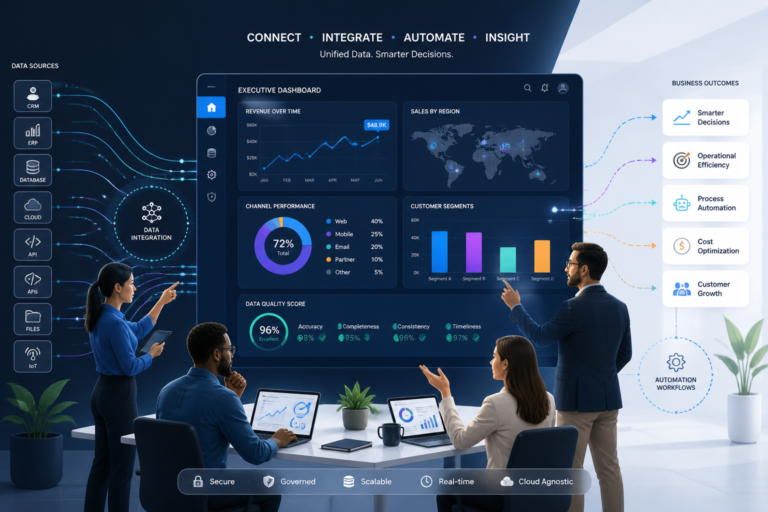
In today’s fast-paced business environment, companies are constantly seeking ways to enhance their operations and maintain a competitive edge. One effective strategy is investing in custom data-driven software. This tailored approach not only meets unique business needs but also significantly improves decision-making processes. Therefore, understanding the benefits of custom software is crucial for any organization aiming for growth.
The Importance of Custom Data-Driven Software
Custom data-driven software is designed specifically for a business’s unique requirements, integrating data in a way that off-the-shelf solutions often cannot. Because of this, businesses can harness their data more effectively, leading to better insights and improved operational efficiency. Here are some key reasons why your business needs custom data-driven software:
- Enhanced Efficiency: Custom software streamlines processes, reducing time spent on mundane tasks. For example, automation features can handle repetitive tasks, allowing employees to focus on higher-level strategic work.
- Better Data Integration: Tailored software allows for seamless integration with existing systems. This ensures that data flows smoothly between different departments, fostering collaboration and communication.
- Competitive Advantage: By utilizing custom software, businesses can differentiate themselves in the marketplace. Unique features and functionalities can set a company apart from competitors who rely on generic solutions.
- Scalability: Custom software can grow with your business. As your needs evolve, the software can be adapted, ensuring it continues to meet your requirements.
How Custom Data Improves Decision-Making
Data is often referred to as the new oil, and for good reason. In addition to enhancing operational efficiency, custom data plays a pivotal role in decision-making. Here’s how:
- Targeted Insights: Custom data provides insights tailored to your specific operations. This means decisions are based on relevant information, leading to better outcomes.
- Real-Time Analysis: With custom software, businesses can analyze data in real-time. This enables quicker responses to market changes or internal challenges.
- Improved Forecasting: Tailored data can enhance forecasting accuracy. By analyzing historical trends specific to your business, you can make more informed predictions about future performance.
When to Invest in Custom Software
It’s essential to know when to consider investing in custom software. Here are some scenarios that indicate it might be time to make the switch:
- Unique Operational Needs: If your business has specific requirements that off-the-shelf solutions cannot meet, it may be time to explore custom options.
- Integration Challenges: If existing software does not integrate well with your data sources, custom software can bridge the gap.
- Desire for Automation: If you aim to automate specific processes that are crucial to your business, custom software can be developed to meet those needs.
Conclusion
In conclusion, investing in custom data-driven software can be a game changer for your business. It not only enhances efficiency and integrates data seamlessly but also provides targeted insights that improve decision-making. Therefore, if you haven’t considered custom software yet, now is the time to explore this powerful tool for your business growth.
Frequently Asked Questions
Here are some common questions about custom data-driven software:
- What is custom software development and how does it benefit my business? Custom software development involves creating tailored solutions designed to meet specific business needs, offering advantages like increased efficiency, better data integration, and competitive edge.
- How does custom data improve business decision-making? Custom data provides precise, relevant insights tailored to your operations, enabling smarter decisions, optimized processes, and targeted growth strategies.
- When should a business consider investing in custom software? Businesses should consider custom software when off-the-shelf solutions do not fully meet unique operational needs, require specific data integration, or aim for competitive advantages through tailored automation.
For more insights into how custom data can empower your business, check out our articles on Custom Data Explained and Understanding Custom Data.