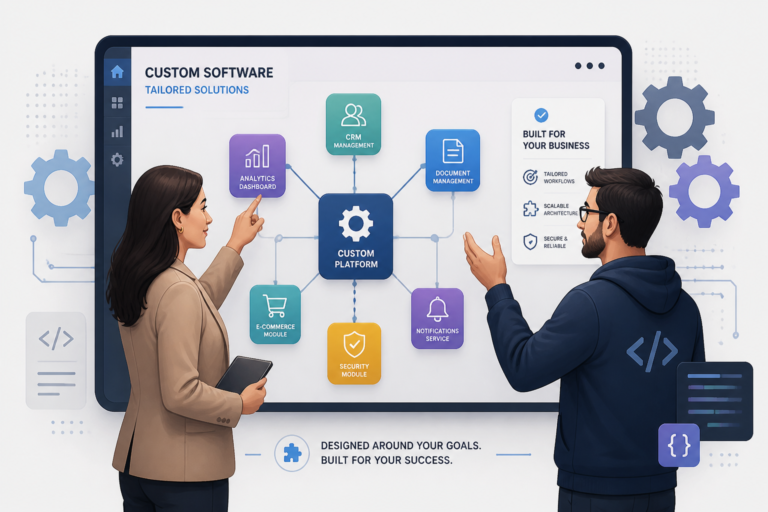
In the ever-evolving landscape of business technology, understanding custom software development is crucial. Many organizations face unique challenges that off-the-shelf software simply cannot address. Therefore, custom software development offers tailored solutions that align perfectly with specific business needs. This article will explore what custom software development entails, its benefits, and why your business should consider investing in it.
What is Custom Software Development?
Custom software development refers to the process of designing and creating software applications that are specifically tailored to meet the unique needs of a business. Unlike off-the-shelf solutions, which are designed for a broad audience, custom software is built with the specific requirements and workflows of a single organization in mind. In other words, it is a bespoke solution that addresses the distinct challenges faced by a business.
Why Your Business Needs Custom Software Development
Investing in custom software development can significantly enhance your business operations. Here are several reasons why your organization might need it:
For useful background on this topic, see Understanding Custom Software Development: When and Why Your Business Needs It.
- Tailored Solutions: Custom software is designed to meet your specific business requirements, allowing for more efficient processes and workflows.
- Competitive Advantage: By utilizing software that is tailored to your needs, you can gain a competitive edge in your industry.
- Scalability: Custom solutions can evolve with your business, adapting to new challenges and opportunities as they arise.
- Integration: Custom software can be seamlessly integrated with your existing systems, allowing for better data flow and operational efficiency.
- Improved Security: Custom software can be designed with specific security features that protect your sensitive data and reduce vulnerabilities.
Key Benefits of Custom Software Development
Custom software development offers numerous advantages over off-the-shelf solutions. To highlight some of them:
- Enhanced Efficiency: Custom software can automate repetitive tasks, streamline processes, and eliminate inefficiencies.
- Improved User Experience: Tailored software can provide a better user experience, as it is designed with the end-user in mind.
- Cost-Effectiveness: Although the initial investment may be higher, custom software can save money in the long run by reducing operational costs.
- Better Support: When you invest in custom software, you often receive dedicated support from the development team, ensuring that any issues are resolved quickly.
When to Consider Custom Software Development
While custom software development can benefit many businesses, it is essential to recognize when it is the right choice for your organization. Here are some signs that it may be time to consider custom software:
- Your current software solutions do not meet your specific operational needs.
- Your business is experiencing rapid growth that off-the-shelf solutions cannot accommodate.
- You require a unique feature set that is not available in existing software products.
- Your organization needs to improve efficiency and reduce operational costs.
How Custom Software Development Works
The custom software development process typically involves several key stages:
- Requirement Gathering: The development team collaborates with stakeholders to understand the specific needs of the business.
- Planning: A detailed project plan is created, outlining the scope, timeline, and resources required.
- Design: The software architecture and user interface are designed to ensure a seamless user experience.
- Development: The coding phase begins, where developers build the software according to the specifications.
- Testing: The software undergoes rigorous testing to identify and fix any issues before deployment.
- Deployment: The software is launched, and users begin to utilize it in their daily operations.
- Maintenance: Ongoing support and updates are provided to ensure the software remains functional and relevant.
For a deeper understanding of the custom software development process, check out our article on How Custom Software Development Works: A Complete Breakdown.
Real-World Examples of Custom Software Development
Many successful companies have leveraged custom software development to enhance their operations. For example, a retail business might develop a custom inventory management system to streamline their supply chain, while a healthcare provider might create a tailored patient management system to improve patient care and operational efficiency.
Conclusion
In conclusion, understanding custom software development is essential for businesses looking to optimize their operations and stay competitive. By investing in tailored solutions, organizations can address their unique needs, improve efficiency, and gain a significant advantage in their respective markets. If you believe your business could benefit from custom software development, consider reaching out to a professional development team to explore your options.
Related XoBytes Products

Agentic Consultant, Product Rep, & Customer Service Agent By XoBytes.com
$19.99
Agentic Consultant for WordPress gives your website a smart AI product rep, customer service agent, and hands-free voice…

Agentic Construction Theme | More than just a theme | Built for all trades
$49.99
Why You Need This Theme And Plugin! Click here for the Demo Agentic Construction Theme by XoBytes is…
Agentic Support Desk for WordPress by XoBytes.com
$19.99
Agentic Support Desk by Xobytes is an AI-powered WordPress support desk built for software sellers, WooCommerce stores, agencies,…

Agent Shield by XoBytes | Protect against agentic software
$25.00
AgentShield is a WordPress AI Agent Firewall that helps detect, monitor, block, and temporarily ban AI crawlers, AI…
Tamper Guard by XoBytes | WordPress Plugin Tamper Detector
$25.00
Protect your commercial WordPress plugins with license-based tamper detection, file integrity monitoring, automatic shutdown protection, and site reporting.…
Product 1 of 6
Implementation Steps for Custom Software Development
Implementing custom software development can be a complex process, but with a clear plan, it can be executed smoothly. Here are the key steps to follow:
Continue with Understanding Custom Software Development: When and Why Your Business Needs It for additional XoBytes guidance.
- Define Objectives: Clearly outline what you want to achieve with the custom software. This includes identifying specific problems it will solve and the goals it should meet.
- Choose the Right Development Partner: Select a development team with experience in your industry. Evaluate their portfolio and client testimonials to ensure they can meet your needs.
- Prototype Development: Before full-scale development, create a prototype to visualize the software. This helps in gathering feedback and making necessary adjustments early in the process.
- Agile Development Approach: Consider using an agile methodology, allowing for iterative development and regular updates based on user feedback. This ensures the final product is more aligned with user expectations.
- Testing and Quality Assurance: Conduct thorough testing at various stages of development to identify bugs and ensure the software is user-friendly and functional.
- Training and Support: Provide training for your team to ensure they are comfortable using the new software. Ongoing support is crucial to address any issues that arise post-launch.
Comparing Custom Software Development with Off-the-Shelf Solutions
When deciding between custom software and off-the-shelf solutions, consider the following comparisons:
- Cost: Custom software typically involves a higher initial investment, but it can lead to long-term savings by reducing operational inefficiencies. Off-the-shelf solutions often have lower upfront costs but may incur additional expenses for licenses and updates.
- Flexibility: Custom software can be modified and scaled according to your business growth, while off-the-shelf solutions may limit your ability to adapt to changing needs.
- Integration: Custom software can be designed to integrate seamlessly with existing systems, whereas off-the-shelf solutions may require additional tools or plugins to achieve compatibility.
- Support: Custom software development usually comes with dedicated support from the development team, while off-the-shelf products may offer generic customer service with limited assistance.
Real-World Case Studies of Successful Custom Software Implementation
Examining real-world examples can provide insight into the tangible benefits of custom software development:
- Healthcare Sector: A hospital implemented a custom electronic health record (EHR) system that streamlined patient data management, resulting in improved patient care and reduced administrative workload.
- Retail Industry: An e-commerce company developed a custom recommendation engine that analyzed customer behavior and preferences, leading to a 30% increase in sales through personalized shopping experiences.
- Manufacturing: A manufacturing firm created a custom inventory tracking system that integrated with their supply chain, reducing stock shortages and improving order fulfillment times.
Decision Criteria for Custom Software Development
When considering custom software development, evaluate the following criteria to determine if it’s the right choice for your business:
- Unique Business Processes: Does your business have specific processes that off-the-shelf software cannot accommodate?
- Long-Term Goals: Are you looking for a solution that can evolve with your business over time?
- Budget Considerations: Are you prepared for the initial investment and ongoing maintenance costs associated with custom software?
- Competitive Landscape: Will having tailored software give you a significant advantage over competitors using standard solutions?
Frequently Asked Questions
Below are some common questions regarding custom software development:
- What is custom software development? Custom software development is the process of creating software solutions tailored specifically to a business’s unique needs, rather than using generic, off-the-shelf tools.
- When should a business consider custom software development? A business should consider custom software development when existing solutions do not meet specific operational requirements, or when tailored features can provide a competitive advantage.
- What are the benefits of custom software for small businesses? Custom software can improve efficiency, enhance customer experience, provide better integration with existing systems, and support unique business processes.
- How does custom software development differ from standard software? Unlike standard software, which is designed for a broad audience, custom software is built specifically to address the particular needs and workflows of a single business.