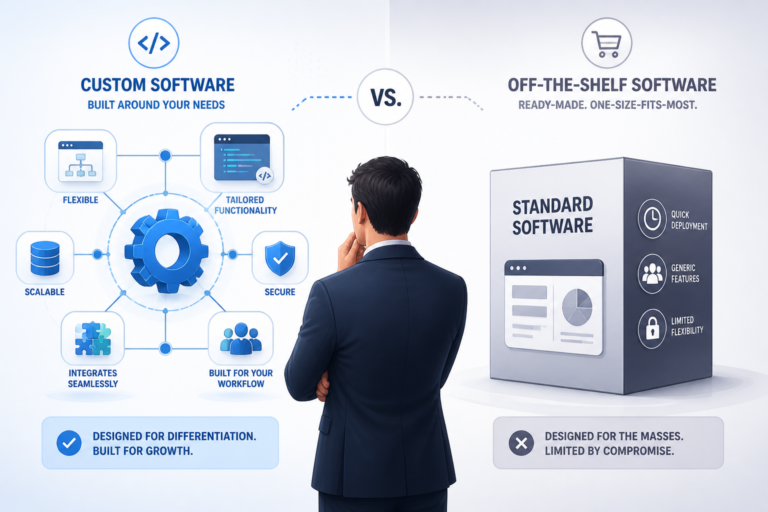
In today’s fast-paced business environment, choosing the right software solution is crucial for success. Many organizations face the dilemma of selecting between custom software and off-the-shelf solutions. Both options have unique advantages and disadvantages, making it essential to understand which fits your business best. Therefore, this article will explore the key differences, benefits, and considerations for each option to help you make an informed decision.
Understanding Custom Software
Custom software is specifically designed to meet the unique needs of a business. Unlike off-the-shelf solutions, which are generic, custom software provides tailored features and functionalities. For example, a company in the manufacturing sector might require software that integrates seamlessly with its production line machinery.
Benefits of Custom Software
- Tailored Features: Custom software allows businesses to include only the features they need, enhancing efficiency and user experience.
- Scalability: As your business grows, custom software can be adapted to meet evolving needs without the limitations often found in off-the-shelf solutions.
- Competitive Advantage: By implementing unique solutions, businesses can differentiate themselves in the market.
However, custom software development can be a lengthy process, often requiring significant time and investment. Because of this, it is essential to weigh the benefits against potential drawbacks.
Exploring Off-the-Shelf Solutions
Off-the-shelf software refers to ready-made solutions that can be purchased and implemented quickly. These products are designed to serve a broad range of businesses and industries. Moreover, they often come with standard features that can be sufficient for many organizations.
Advantages of Off-the-Shelf Software
- Lower Initial Costs: Off-the-shelf solutions typically require less upfront investment compared to custom software.
- Quick Deployment: Businesses can implement these solutions rapidly, allowing for immediate use.
- Maintenance and Support: Many off-the-shelf solutions come with built-in support and regular updates.
However, off-the-shelf solutions may not address all specific business needs. In contrast, they can also lead to inefficiencies if companies find themselves using features they do not need.
Cost Comparisons
When comparing the costs of custom software and off-the-shelf solutions, various factors come into play. Custom software generally involves higher upfront development costs. However, it can provide long-term savings through its tailored fit. On the other hand, off-the-shelf solutions often have lower initial costs but may incur additional expenses for customization or limitations in functionality.
Making the Right Choice
Choosing between custom software and off-the-shelf solutions depends on several factors:
- Business Size: Larger organizations might benefit more from custom solutions due to their complex needs.
- Operational Requirements: Assess specific functionalities required for daily operations.
- Budget: Consider both initial costs and long-term financial implications.
- Scalability: Determine future needs and how each option can adapt.
- Time-to-Deploy: Evaluate how quickly you need the solution operational.
To assist in your decision-making process, consider reviewing How Custom Made Software Differs from Off-the-Shelf Solutions for a deeper understanding of each option.
Conclusion
In conclusion, both custom software and off-the-shelf solutions come with their unique sets of advantages and disadvantages. Custom software offers tailored features and scalability, while off-the-shelf solutions provide lower costs and quick deployment. Therefore, it is crucial to assess your business needs and consider factors such as budget, scalability, and time-to-deploy before making a decision.
Implementation Steps for Custom Software
Implementing custom software can be a complex process, but following a structured approach can help ensure success. Here are the key steps involved:
For a practical companion to this section, explore Choosing Between Off-the-Shelf Software and Custom Solutions.
- Requirement Analysis: Gather detailed requirements from stakeholders to understand the specific needs of the business.
- Design Phase: Create wireframes and prototypes to visualize the software’s functionality and user interface.
- Development: Begin coding the software, focusing on the agreed-upon features and functionalities.
- Testing: Conduct thorough testing to identify and fix any bugs or issues before deployment.
- Deployment: Roll out the software to users, ensuring that they have the necessary training and support.
- Feedback and Iteration: Collect user feedback and make necessary adjustments to improve the software over time.
Key Considerations for Off-the-Shelf Solutions
While off-the-shelf software can be appealing due to its quick deployment and lower costs, there are several factors to consider before making a decision:
- Integration Capabilities: Assess how well the software integrates with your existing systems and processes.
- Customization Options: Determine the extent to which the software can be customized to fit your business needs.
- Vendor Reliability: Research the vendor’s reputation, support services, and update frequency to ensure long-term viability.
- User Experience: Evaluate the user interface and overall experience to ensure it meets the needs of your team.
Real-World Examples
Understanding how other businesses have navigated the choice between custom software and off-the-shelf solutions can provide valuable insights:
- Custom Software: A healthcare provider developed a custom patient management system that integrated with their existing electronic health records (EHR) system, improving patient care and operational efficiency.
- Off-the-Shelf Solution: A small retail business opted for an off-the-shelf inventory management system that provided essential features at a fraction of the cost, allowing them to manage stock levels effectively without extensive customization.
Related XoBytes Products

Agentic Consultant, Product Rep, & Customer Service Agent By XoBytes.com
$19.99
Agentic Consultant for WordPress gives your website a smart AI product rep, customer service agent, and hands-free voice…
Agentic Support Desk for WordPress by XoBytes.com
$19.99
Agentic Support Desk by Xobytes is an AI-powered WordPress support desk built for software sellers, WooCommerce stores, agencies,…

Agent Shield by XoBytes | Protect against agentic software
$25.00
AgentShield is a WordPress AI Agent Firewall that helps detect, monitor, block, and temporarily ban AI crawlers, AI…
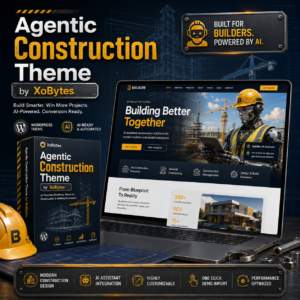
Agentic Construction Theme | More than just a theme | Built for all trades
$49.99
Why You Need This Theme And Plugin! Click here for the Demo Agentic Construction Theme by XoBytes is…
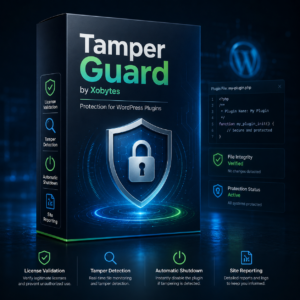
Tamper Guard by XoBytes | WordPress Plugin Tamper Detector
$25.00
Protect your commercial WordPress plugins with license-based tamper detection, file integrity monitoring, automatic shutdown protection, and site reporting.…
Product 1 of 6
Comparative Analysis: Custom vs. Off-the-Shelf
To help clarify the differences between custom software and off-the-shelf solutions, consider the following comparative analysis:
| Criteria | Custom Software | Off-the-Shelf Software |
|---|---|---|
| Cost | Higher upfront costs, potential long-term savings | Lower initial costs, possible hidden costs for customization |
| Time to Deploy | Longer deployment time due to development | Quick deployment, often within days |
| Scalability | Easily scalable to meet growing needs | Limited scalability, may require switching software |
| Support | Depends on development team; may require ongoing maintenance | Regular updates and support from the vendor |
Future Trends in Software Solutions
As technology continues to evolve, businesses should be aware of emerging trends that may influence their choice between custom and off-the-shelf software:
- Artificial Intelligence: Many off-the-shelf solutions are beginning to incorporate AI capabilities, allowing for smarter automation and data analysis.
- Cloud Computing: Cloud-based solutions are becoming more prevalent, offering flexibility and scalability for both custom and off-the-shelf options.
- Low-Code/No-Code Platforms: These platforms are making it easier for businesses to create custom solutions without extensive coding knowledge, providing a middle ground between custom and off-the-shelf software.
Implementation Steps for Off-the-Shelf Solutions
While off-the-shelf software tends to be easier to deploy, it’s still essential to follow a structured approach to ensure that it meets your business needs effectively. Here are the key steps involved in implementing off-the-shelf solutions:
- Needs Assessment: Identify the specific requirements of your business to ensure the selected software meets these needs.
- Vendor Evaluation: Research and compare different vendors, looking at customer reviews, support options, and update frequency.
- Trial and Demos: Take advantage of free trials or demos to assess the software’s usability and functionality in real-world scenarios.
- Integration Testing: Test the software’s compatibility with your existing systems to ensure smooth integration.
- Training: Provide training for your team to maximize the software’s potential and ensure everyone is comfortable using it.
- Feedback Loop: Establish a process for collecting user feedback post-implementation to address any issues or areas for improvement.
Decision Criteria for Choosing Software Solutions
When deciding between custom software and off-the-shelf solutions, consider the following criteria to guide your choice:
Continue with Custom Software or Ready-Made? Comparing Proprietary and Off-the-Shelf Solutions for additional XoBytes guidance.
- Specificity of Needs: Evaluate how unique your business processes are. Highly specialized needs may favor custom solutions.
- Budget Constraints: Analyze your budget not just for initial costs but also for long-term maintenance and potential upgrade costs.
- Time Sensitivity: If you need a solution quickly, off-the-shelf software might be the better option.
- Future-Proofing: Consider how adaptable each option is to future changes in your business environment.
- User Adoption: Assess how likely your team is to adopt the solution based on its usability and the training required.
Real-World Case Studies
Examining real-world examples can provide clarity on how different businesses have approached their software needs:
Case Study: Custom Software in Logistics
A logistics company developed a custom fleet management system that integrated GPS tracking, route optimization, and real-time analytics. This tailored solution allowed them to streamline operations, reduce fuel costs, and improve delivery times, showcasing the benefits of custom software in a specialized industry.
Case Study: Off-the-Shelf Solution in Education
An educational institution opted for an off-the-shelf learning management system (LMS) that provided essential features like course management and student tracking. The quick deployment enabled them to enhance their online learning capabilities without the need for extensive customization, demonstrating the effectiveness of off-the-shelf solutions in a more generic context.
Future Considerations
As technology continues to advance, businesses should stay informed about potential developments that could impact their software choices:
- Integration of Emerging Technologies: Look for solutions that incorporate emerging technologies like AI, machine learning, and blockchain for enhanced functionalities.
- Regulatory Compliance: Ensure that any software solution you consider complies with industry regulations and standards to avoid legal issues.
- Data Security: Evaluate the security measures in place for both custom and off-the-shelf solutions, as data breaches can have significant repercussions.
Frequently Asked Questions
Here are some common questions regarding custom software and off-the-shelf solutions:
- What are the main advantages of custom software over off-the-shelf solutions? Custom software offers tailored features, greater flexibility, and scalability to meet specific business needs, often leading to improved efficiency and competitive advantage.
- When is it more appropriate to choose off-the-shelf software? Off-the-shelf solutions are suitable for businesses seeking quick deployment, lower initial costs, and standard functionalities without the need for extensive customization.
- How do costs typically compare between custom and off-the-shelf software? Custom software generally involves higher upfront development costs but can provide long-term savings through tailored fit, whereas off-the-shelf solutions usually have lower initial costs but may incur additional expenses for customization or limitations.
- What factors should influence my decision between custom and off-the-shelf software? Consider your business size, specific operational requirements, budget, desired scalability, and time-to-deploy when choosing between these options.