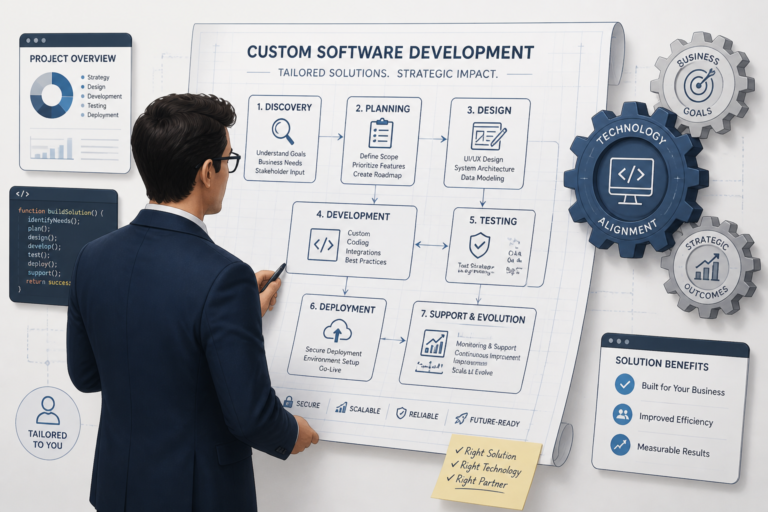
In today’s fast-paced business environment, many organizations face unique challenges that off-the-shelf software cannot address effectively. Therefore, evaluating the costs and benefits of custom IT development is crucial for making informed decisions. This article will delve into what custom IT development entails, the various costs involved, and the potential benefits it can bring to your organization.
What is Custom IT Development?
Custom IT development refers to the process of creating software solutions tailored specifically to meet the unique needs of a business. Unlike off-the-shelf software, which is designed for a broad audience, custom IT solutions are built to address specific operational challenges and requirements. As a result, businesses can achieve better alignment between their software and internal processes.
Why Consider Custom IT Development?
Many businesses find themselves at a crossroads when it comes to software solutions. Off-the-shelf options may not fully address their needs, leading to inefficiencies and missed opportunities. Here are some compelling reasons to consider custom IT development:
- Tailored Solutions: Custom IT development allows businesses to create software that fits their specific workflows and processes.
- Scalability: As your business grows, custom solutions can be scaled to accommodate increased demand.
- Competitive Advantage: By implementing features that are unique to your business, you can gain an edge over competitors.
- Integration: Custom IT solutions can be designed to integrate seamlessly with existing systems, enhancing overall efficiency.
Understanding the Costs of Custom IT Development
While the benefits of custom IT development are clear, it is essential to understand the costs involved. The total cost of development can vary significantly based on several factors:
- Project Scope: The complexity and size of the project will greatly influence the cost. Larger projects with more features typically require more resources.
- Technology Stack: The choice of technologies used for development can affect costs. For example, some programming languages and frameworks are more expensive to work with than others.
- Development Duration: Longer projects will naturally incur higher costs due to extended resource allocation.
- Maintenance and Support: Ongoing maintenance and support should also be factored into the overall budget.
To better understand these costs, businesses can refer to resources such as What Influences Custom Software Support Costs? A Complete Breakdown, which provides insights into budgeting for custom development.
Benefits of Custom IT Development
The advantages of custom IT development extend beyond mere functionality. Here are some key benefits:
- Increased Efficiency: Custom software is designed to optimize specific processes, leading to greater operational efficiency.
- Better Alignment: Tailored solutions ensure that the software aligns closely with business processes, reducing friction and improving user satisfaction.
- Enhanced Data Security: Custom solutions can incorporate advanced security features tailored to the organization’s needs.
- Future-Proofing: As technology evolves, custom solutions can be updated more easily to keep pace with changing business requirements.
How to Evaluate the Costs and Benefits
When evaluating whether to invest in custom IT development, consider the following steps:
- Identify Business Needs: Clearly outline the specific challenges your organization faces and how custom software can address them.
- Conduct Cost-Benefit Analysis: Weigh the potential benefits against the estimated costs to determine if the investment is justifiable.
- Research Providers: Look for reputable development firms with experience in your industry to ensure quality and reliability.
- Plan for the Future: Consider how the software will evolve with your business and what additional features may be needed down the line.
For further insights, you might find it helpful to read How Custom Software Development Can Transform Your Business Operations, which discusses the transformative power of custom solutions.
Conclusion
In conclusion, evaluating the costs and benefits of custom IT development is essential for any business looking to enhance its operations through tailored solutions. By understanding the unique needs of your organization and the potential advantages of custom software, you can make informed decisions that support long-term success.
Related XoBytes Products

Agentic Consultant, Product Rep, & Customer Service Agent By XoBytes.com
$19.99
Agentic Consultant for WordPress gives your website a smart AI product rep, customer service agent, and hands-free voice…

Agentic Construction Theme | More than just a theme | Built for all trades
$49.99
Why You Need This Theme And Plugin! Click here for the Demo Agentic Construction Theme by XoBytes is…
Agentic Support Desk for WordPress by XoBytes.com
$19.99
Agentic Support Desk by Xobytes is an AI-powered WordPress support desk built for software sellers, WooCommerce stores, agencies,…
License manager for WooCommerce by XoBytes.com
$25.00
Xobytes License Manager for WooCommerce is a powerful WooCommerce license manager plugin that lets you sell software licenses,…

Agent Shield by XoBytes | Protect against agentic software
$25.00
AgentShield is a WordPress AI Agent Firewall that helps detect, monitor, block, and temporarily ban AI crawlers, AI…
Tamper Guard by XoBytes | WordPress Plugin Tamper Detector
$25.00
Protect your commercial WordPress plugins with license-based tamper detection, file integrity monitoring, automatic shutdown protection, and site reporting.…
Product 1 of 6
Practical Examples of Custom IT Development
To illustrate the impact of custom IT development, consider the following real-world examples:
Continue with Understanding Custom Software Development: Benefits, Costs, and Key Factors for additional XoBytes guidance.
- Healthcare Management System: A mid-sized hospital implemented a custom IT solution to manage patient records, appointments, and billing. This tailored system integrated with existing medical devices, improving data accuracy and patient care while reducing administrative overhead.
- Retail Inventory Management: A retail chain developed a custom inventory management system that tracked stock levels in real-time across multiple locations. This solution not only streamlined operations but also provided insights into sales trends, enabling better decision-making.
- Financial Services Platform: A fintech startup created a custom platform that allowed users to manage investments and track financial goals. By incorporating unique features such as personalized dashboards and automated alerts, the platform differentiated itself in a competitive market.
Comparing Custom IT Development with Off-the-Shelf Solutions
When deciding between custom IT development and off-the-shelf solutions, it’s essential to weigh the pros and cons of each:
Custom IT Development
- Pros:
- Tailored to specific business needs
- Scalable as the business grows
- Better integration with existing systems
- Enhanced security features
- Cons:
- Higher initial investment
- Longer development time
- Requires ongoing maintenance and updates
Off-the-Shelf Solutions
- Pros:
- Lower upfront costs
- Quick implementation
- Regular updates and support from the vendor
- Cons:
- Limited customization options
- May not fully meet specific business needs
- Potential for inefficiencies and workarounds
Implementation Steps for Custom IT Development
Once you decide to pursue custom IT development, following a structured implementation process can help ensure success:
- Define Objectives: Clearly outline what you want to achieve with the custom solution, including specific functionalities and performance metrics.
- Gather Requirements: Collaborate with stakeholders to gather detailed requirements that the software must fulfill.
- Select a Development Partner: Research and choose a reputable development firm that aligns with your project goals and has experience in your industry.
- Prototype and Feedback: Develop a prototype of the software and gather feedback from end-users to ensure it meets their needs.
- Development and Testing: Proceed with full-scale development, followed by rigorous testing to identify and fix any issues before launch.
- Deployment and Training: Implement the solution within your organization and provide training to users to ensure smooth adoption.
- Ongoing Support: Establish a plan for ongoing maintenance, updates, and support to adapt to changing business needs.
Decision Criteria for Custom IT Development
Before committing to custom IT development, consider the following criteria to guide your decision:
- Business Needs: Assess whether your specific challenges can be effectively addressed by a custom solution.
- Budget Constraints: Determine if your organization has the financial resources to support custom development.
- Long-term Vision: Evaluate how the custom solution aligns with your organization’s long-term goals and growth strategy.
- Technical Expertise: Consider whether your team has the necessary technical expertise to manage a custom solution or if you will rely on external partners.
Frequently Asked Questions
In this section, we address some common questions regarding custom IT development:
- What is custom IT development? Custom IT development involves creating tailored software solutions designed specifically to meet a business’s unique needs, rather than using generic off-the-shelf tools.
- When should a business consider custom IT development? A business should consider custom IT development when existing solutions do not fully address its specific workflows, scalability needs, or integration requirements.
- What are the main benefits of custom IT development? The main benefits include increased efficiency, better alignment with business processes, scalability, and a competitive advantage through tailored features.
- How can I estimate the cost of custom IT development? Cost estimation depends on factors like project scope, complexity, technology stack, and development duration. Reviewing related articles on cost breakdowns and pricing models can provide detailed insights.