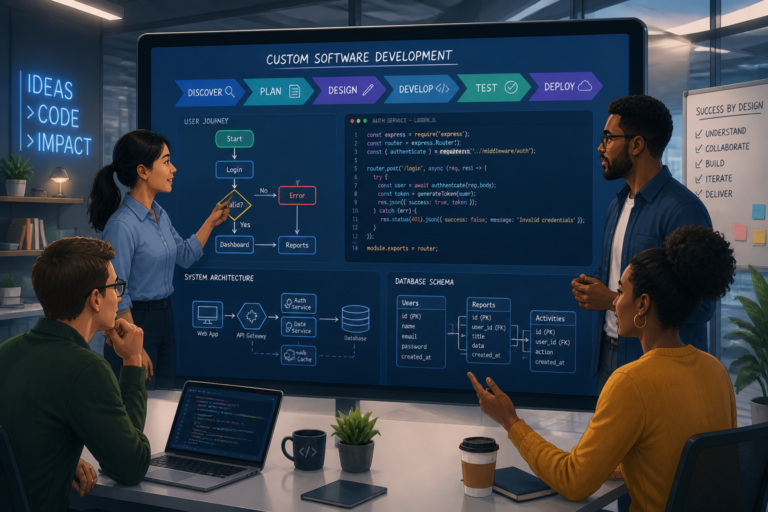
In today’s fast-paced digital landscape, businesses often require software solutions tailored to their specific needs. Custom software development provides a way to build solutions that enhance efficiency and meet unique operational challenges. In this Step-by-Step Guide to Building Custom Software, we will explore the entire process, from initial planning to deployment and beyond.
Understanding Custom Software Development
Custom software development involves creating software applications specifically designed to meet the requirements of a business or user. Unlike off-the-shelf solutions, custom software is tailored to the specific needs of an organization, offering greater flexibility and scalability. As a result, many businesses are choosing to invest in custom solutions to gain a competitive edge.
The Custom Software Development Process
Building custom software involves several key steps. Below, we outline a comprehensive view of the development process:
- Requirements Analysis: This initial stage involves gathering requirements from stakeholders to understand their needs and expectations. It is crucial to define the scope of the project clearly.
- System Design: Once the requirements are established, the next step is to design the system architecture. This includes selecting the technology stack, defining user interfaces, and creating database schemas.
- Coding: In this phase, developers write the code for the software. This step often involves collaboration between front-end and back-end developers to ensure seamless integration.
- Testing: Comprehensive testing is essential to identify and fix any bugs or issues. This includes unit testing, integration testing, and user acceptance testing.
- Deployment: After testing, the software is deployed to the production environment. This step may involve data migration and training for end-users.
- Ongoing Maintenance: Post-deployment, the software requires regular updates and maintenance to ensure optimal performance and security.
To learn more about the development process, consider checking out our article on How Custom Software Development Works: A Complete Breakdown.
Benefits of Custom Software
Investing in custom software development offers numerous advantages:
- Tailored Solutions: Custom software is designed to meet the unique needs of your business, ensuring that it aligns perfectly with your operations.
- Scalability: As your business grows, custom software can be scaled to accommodate increased demands.
- Integration: Custom solutions can be integrated with existing systems, improving overall efficiency.
- Competitive Advantage: Custom software can provide features and functionalities that give your business a competitive edge in the market.
Cost Factors in Custom Software Development
The cost of developing custom software can vary significantly based on several factors, including:
- Complexity of the software
- Technology stack used
- Development team location
- Project timeline
For a deeper understanding of cost considerations, check out our post on Cost Breakdown and Budgeting Tips for Custom Software Platforms.
Real-World Applications of Custom Software
Custom software can be applied across various industries, including:
- Healthcare: Custom solutions can streamline patient management systems and improve data security.
- Finance: Financial institutions can use custom software for secure transactions and regulatory compliance.
- Retail: E-commerce businesses can develop tailored platforms to enhance customer experiences.
Key Considerations Before Starting Custom Software Development
Before embarking on the journey of custom software development, it’s essential to evaluate several key considerations that can significantly impact the project’s success. Here are some critical factors to keep in mind:
- Define Your Objectives: Clearly outline what you hope to achieve with the custom software. Are you looking to improve efficiency, enhance customer engagement, or streamline operations?
- Budget Constraints: Establish a realistic budget that encompasses not only development costs but also maintenance, updates, and potential scaling.
- Timeline: Set a timeline for the project, considering the complexity of the software and the resources available.
- Stakeholder Involvement: Ensure that key stakeholders are involved in the requirements gathering phase to provide insights and feedback throughout the development process.
Choosing the Right Development Team
Selecting the right team for your custom software development project is crucial. Here are some tips to help you make an informed decision:
- Evaluate Experience: Look for a team with a proven track record in custom software development. Review their portfolio and case studies to assess their expertise.
- Technical Skills: Ensure that the team possesses the necessary technical skills relevant to your project’s technology stack.
- Communication: Choose a team that prioritizes clear communication and is open to collaboration. This will facilitate a smoother development process.
- Post-Launch Support: Inquire about the support and maintenance services the team offers after the software is deployed.
Implementation Steps for Custom Software
Once you have your development team in place, the following implementation steps can help guide the project towards successful completion:
- Agile Methodology: Consider adopting an Agile approach, which allows for iterative development and flexibility in responding to changes.
- Prototyping: Create a prototype of the software to visualize the end product. This helps in gathering feedback early in the process.
- Regular Check-Ins: Schedule regular meetings with your development team to review progress, address concerns, and make adjustments as needed.
- User Training: Plan for comprehensive training sessions for end-users to ensure they are comfortable and proficient in using the new software.
Measuring Success After Deployment
Once your custom software is deployed, it’s important to measure its success. Here are some metrics to consider:
Related XoBytes Products

Agentic Construction Theme | More than just a theme | Built for all trades
$49.99
Why You Need This Theme And Plugin! Click here for the Demo Agentic Construction Theme by XoBytes is…

Agentic Consultant, Product Rep, & Customer Service Agent By XoBytes.com
$19.99
Agentic Consultant for WordPress gives your website a smart AI product rep, customer service agent, and hands-free voice…
Agentic Support Desk for WordPress by XoBytes.com
$19.99
Agentic Support Desk by Xobytes is an AI-powered WordPress support desk built for software sellers, WooCommerce stores, agencies,…

Agent Shield by XoBytes | Protect against agentic software
$25.00
AgentShield is a WordPress AI Agent Firewall that helps detect, monitor, block, and temporarily ban AI crawlers, AI…
Tamper Guard by XoBytes | WordPress Plugin Tamper Detector
$25.00
Protect your commercial WordPress plugins with license-based tamper detection, file integrity monitoring, automatic shutdown protection, and site reporting.…
License manager for WooCommerce by XoBytes.com
$25.00
Xobytes License Manager for WooCommerce is a powerful WooCommerce license manager plugin that lets you sell software licenses,…
Product 1 of 6
For a practical companion to this section, explore When to Consider Custom Software: Indicators for Business Growth.
- User Adoption Rates: Monitor how quickly and effectively users adopt the new software.
- Performance Metrics: Evaluate the software’s performance in terms of speed, reliability, and user satisfaction.
- Return on Investment (ROI): Analyze the financial benefits gained from the custom software compared to the initial investment.
- Feedback Collection: Regularly collect feedback from users to identify areas for improvement or additional features that may enhance the software.
Future-Proofing Your Custom Software
To ensure that your custom software remains relevant and effective over time, consider these future-proofing strategies:
- Scalability Planning: Design the software with scalability in mind, allowing it to grow alongside your business needs.
- Regular Updates: Schedule regular updates to incorporate new features, security patches, and performance enhancements.
- Technology Trends: Stay informed about emerging technologies and trends in your industry to keep your software competitive.
- User Feedback Integration: Continuously integrate user feedback to adapt the software to changing needs and preferences.
Common Challenges in Custom Software Development
While custom software development offers numerous benefits, it also comes with its own set of challenges. Understanding these challenges can help you prepare and mitigate potential risks:
- Scope Creep: This occurs when additional features or requirements are added after the project has started, potentially leading to delays and increased costs. To manage this, establish a clear project scope at the outset and stick to it.
- Communication Gaps: Miscommunication between stakeholders and the development team can lead to misunderstandings. Regular updates and meetings can help ensure everyone is on the same page.
- Technical Debt: Rushing through development can lead to shortcuts that create technical debt, making future changes more difficult. Prioritize thorough testing and code reviews to minimize this risk.
- User Resistance: Users may be resistant to change, especially if they are accustomed to existing systems. Providing adequate training and demonstrating the benefits of the new software can help ease this transition.
Best Practices for Custom Software Development
To ensure the success of your custom software project, consider implementing the following best practices:
- Involve Users Early: Engage end-users during the requirements gathering phase to ensure the software meets their needs and expectations.
- Iterative Development: Use an iterative approach to development, allowing for regular feedback and adjustments throughout the project lifecycle.
- Documentation: Maintain thorough documentation of the development process, including requirements, design decisions, and user guides. This will facilitate easier updates and maintenance in the future.
- Quality Assurance: Implement a robust QA process that includes automated testing, manual testing, and user acceptance testing to ensure the software is reliable and meets quality standards.
Comparing Custom Software Development Approaches
When embarking on a custom software project, you may encounter different development methodologies. Here’s a comparison of some common approaches:
- Waterfall: A linear approach where each phase must be completed before moving on to the next. This method is straightforward but can be inflexible if changes are needed mid-project.
- Agile: An iterative approach that allows for flexibility and continuous feedback. Agile is suitable for projects where requirements may evolve over time.
- DevOps: Focuses on collaboration between development and operations teams to streamline the development process and improve deployment frequency. This approach emphasizes automation and continuous integration.
Real-World Case Study: A Successful Custom Software Implementation
To illustrate the benefits of custom software, let’s examine a hypothetical case study:
Company: ABC Logistics
Continue with How Much Does It Cost to Build a Custom Software Development Platform? A Complete Guide for additional XoBytes guidance.
Challenge: ABC Logistics faced inefficiencies in their order processing system, leading to delays and customer dissatisfaction.
Solution: The company decided to invest in a custom software solution that integrated their inventory management, order tracking, and customer communication into a single platform.
Implementation: By following an Agile methodology, ABC Logistics engaged their employees in the development process, allowing for feedback and adjustments along the way. They also provided comprehensive training to ensure a smooth transition.
Results: After deployment, ABC Logistics reported a 30% increase in order processing speed and a significant improvement in customer satisfaction ratings.
Conclusion
By understanding the challenges, best practices, and methodologies associated with custom software development, businesses can make informed decisions that lead to successful project outcomes. Whether you’re a startup or an established enterprise, investing in custom software tailored to your unique needs can drive efficiency and enhance your competitive edge.
Frequently Asked Questions
To further assist you, we have compiled some frequently asked questions related to custom software development:
What are the main steps involved in developing custom software?
The main steps include requirements analysis, system design, coding, testing, deployment, and ongoing maintenance. Each phase ensures the software meets specific business needs.
How does custom software differ from off-the-shelf solutions?
Custom software is tailored to your business requirements, offering greater flexibility and scalability, whereas off-the-shelf solutions are generic and may require adjustments to fit your processes.
What technical components are involved in custom software development?
Key components include architecture design, coding languages, databases, APIs, user interfaces, and security protocols, all integrated to create a cohesive solution.
When should a business consider developing custom software?
When existing solutions do not fully meet your specific needs, or you require unique features, scalability, or integration capabilities that off-the-shelf products cannot provide.