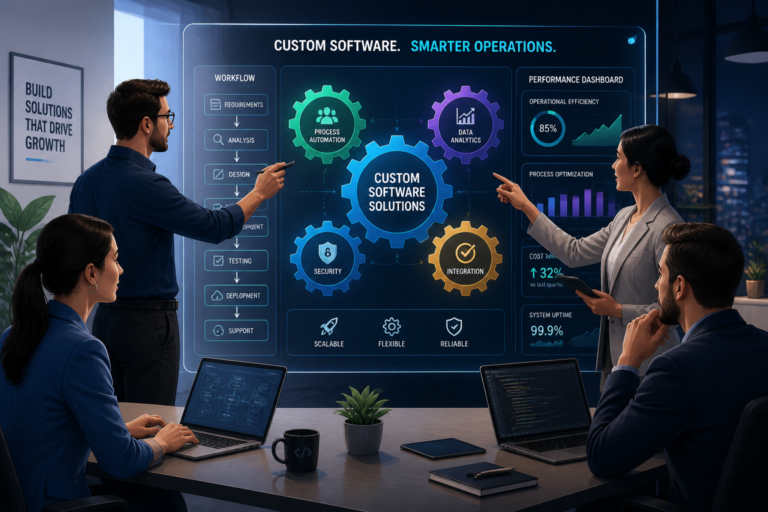
In today’s fast-paced business environment, efficiency is key. One effective way to enhance operational efficiency is through custom software development. This comprehensive guide will explore how to build custom software that meets your business needs.
Understanding Custom Software Development
Custom software development refers to the process of creating software tailored specifically for a business’s unique requirements. Unlike off-the-shelf solutions, custom software is designed to address specific workflows and operational challenges. As a result, it can provide significant advantages, such as improved efficiency, better integration with existing systems, and enhanced scalability.
Benefits of Custom Software
There are several reasons why businesses should consider investing in custom software:
For useful background on this topic, see How Custom Software Development Works: A Complete Breakdown.
- Tailored Solutions: Custom software is designed to meet the specific needs of your business, ensuring that it aligns perfectly with your operational goals.
- Increased Efficiency: By automating processes and streamlining workflows, custom software can significantly improve productivity.
- Scalability: Custom solutions can be designed to grow with your business, allowing for easy updates and modifications as needs change.
- Better Integration: Custom software can be integrated seamlessly with existing systems, reducing the risk of data silos and improving overall data flow.
Key Factors Influencing Custom Software Development
When planning a custom software project, several factors should be considered:
- Project Complexity: The more complex the project, the higher the cost and time required for development.
- Features Required: The specific features and functionalities needed will impact the overall project scope and cost.
- Development Time: Time constraints can affect the development process and may lead to increased costs if expedited timelines are required.
- Team Expertise: The experience and skills of the development team can influence both the quality and cost of the final product.
- Platform Choice: The choice of technology stack and platform can also affect development time and cost.
Planning and Budgeting for Custom Software Development
To ensure a successful project, it’s crucial to have a clear plan and budget. Here are some steps to consider:
- Define Your Goals: Clearly outline what you want to achieve with the custom software.
- Research Options: Investigate potential development approaches and technologies that best suit your needs.
- Set a Budget: Determine how much you are willing to invest in the project, considering both initial costs and ongoing maintenance.
- Choose the Right Team: Select a development team with the necessary expertise and experience in custom software development.
Steps to Building Custom Software
Building custom software typically involves several key steps:
- Requirements Gathering: Collaborate with stakeholders to gather and document all requirements.
- Design: Create a design that outlines the software architecture and user interface.
- Development: Begin coding the software based on the approved design.
- Testing: Conduct thorough testing to identify and fix any issues before deployment.
- Deployment: Launch the software and train users on how to effectively utilize it.
- Maintenance: Provide ongoing support and updates as necessary.
For more detailed guidance, refer to our Step-by-Step Guide to Building Custom Software.
Understanding the Costs of Custom Software Development
Understanding the costs associated with custom software development is crucial for budgeting effectively. Costs can vary widely based on the factors outlined above. To help you navigate this process, we recommend reviewing our article on Cost Breakdown: Building Custom Software Development Platforms for Business Success.
Conclusion
Building custom software can significantly enhance your business efficiency by providing tailored solutions that meet your specific needs. By understanding the benefits, key factors, and costs associated with custom software development, you can make informed decisions that drive your business forward.
Choosing the Right Development Methodology
When embarking on a custom software development project, selecting the right development methodology is crucial. The methodology you choose can significantly impact the project’s success, timeline, and budget. Here are some popular methodologies:
- Agile: This iterative approach allows for flexibility and adaptability throughout the development process. Agile is particularly effective for projects where requirements may evolve over time.
- Waterfall: A linear and sequential approach, Waterfall is suitable for projects with clearly defined requirements. However, it can be less flexible if changes are needed mid-development.
- Scrum: A subset of Agile, Scrum involves short development cycles called sprints, allowing teams to focus on specific features and deliver them incrementally.
- DevOps: This methodology emphasizes collaboration between development and operations teams, facilitating continuous integration and delivery, which can lead to faster deployment times.
Related XoBytes Products

Agentic Consultant, Product Rep, & Customer Service Agent By XoBytes.com
$19.99
Agentic Consultant for WordPress gives your website a smart AI product rep, customer service agent, and hands-free voice…

Agentic Construction Theme | More than just a theme | Built for all trades
$49.99
Why You Need This Theme And Plugin! Click here for the Demo Agentic Construction Theme by XoBytes is…
Agentic Support Desk for WordPress by XoBytes.com
$19.99
Agentic Support Desk by Xobytes is an AI-powered WordPress support desk built for software sellers, WooCommerce stores, agencies,…
License manager for WooCommerce by XoBytes.com
$25.00
Xobytes License Manager for WooCommerce is a powerful WooCommerce license manager plugin that lets you sell software licenses,…

Agent Shield by XoBytes | Protect against agentic software
$25.00
AgentShield is a WordPress AI Agent Firewall that helps detect, monitor, block, and temporarily ban AI crawlers, AI…
Tamper Guard by XoBytes | WordPress Plugin Tamper Detector
$25.00
Protect your commercial WordPress plugins with license-based tamper detection, file integrity monitoring, automatic shutdown protection, and site reporting.…
Product 1 of 6
Real-World Examples of Custom Software Success
Understanding how other businesses have successfully implemented custom software can provide valuable insights. Here are a few examples:
Continue with Understanding the Mechanics of Custom Software for Business Success for additional XoBytes guidance.
- Retail Industry: A clothing retailer developed a custom inventory management system that integrated with their e-commerce platform. This solution improved stock tracking, reduced overstock situations, and enhanced customer satisfaction through timely order fulfillment.
- Healthcare Sector: A hospital implemented a custom patient management system that streamlined appointment scheduling and patient records. This system reduced administrative workload and improved patient care by ensuring quick access to medical histories.
- Manufacturing: A manufacturing company created a custom software tool to monitor machine performance and predict maintenance needs. This proactive approach minimized downtime and improved overall operational efficiency.
Implementation Steps for Custom Software
Implementing custom software requires careful planning and execution. Here are the essential steps to ensure a smooth implementation:
- Stakeholder Engagement: Involve key stakeholders early in the process to gather insights and ensure alignment with business goals.
- Training and Support: Provide comprehensive training for end-users to help them adapt to the new system. Ongoing support should also be established to address any issues that arise post-deployment.
- Feedback Loop: Establish a feedback mechanism to gather user input on the software’s performance. This information can guide future updates and enhancements.
- Monitoring and Evaluation: After implementation, continuously monitor the software’s effectiveness in achieving desired outcomes. Evaluate its impact on business efficiency and make adjustments as necessary.
Comparing Custom Software to Off-the-Shelf Solutions
While off-the-shelf software solutions can be tempting due to their lower upfront costs and immediate availability, they often fall short in meeting specific business needs. Here are some key comparisons:
- Customization: Custom software is tailored to your unique requirements, while off-the-shelf solutions may require workarounds or compromises.
- Cost Over Time: Although initial costs for custom software may be higher, the long-term benefits often outweigh the investment, as it can lead to greater efficiency and reduced operational costs.
- Scalability: Custom solutions can grow with your business, while off-the-shelf software may not accommodate future needs without significant upgrades.
- Support and Maintenance: Custom software typically comes with dedicated support from the development team, whereas off-the-shelf products may rely on general customer service.
Key Metrics for Measuring Software Efficiency
To assess the effectiveness of your custom software, consider tracking the following key performance indicators (KPIs):
- Productivity Gains: Measure the increase in productivity among employees using the software compared to previous methods.
- Cost Savings: Analyze any reductions in operational costs resulting from improved efficiency.
- User Adoption Rate: Track how quickly and widely the software is adopted across the organization.
- Error Reduction: Monitor the decrease in errors or issues that arise from manual processes that the software automates.
Frequently Asked Questions
Here are some common questions regarding custom software development:
- What is custom software development? Custom software development is the process of designing and building software tailored specifically to meet the unique needs of a business or organization.
- When should a business consider developing custom software? A business should consider custom software when off-the-shelf solutions do not fully address its specific workflows, scalability needs, or integration requirements.
- What factors influence the cost of custom software development? Key factors include project complexity, features required, development time, team expertise, and platform choice.
- How long does it typically take to develop custom software? Development duration varies based on scope but generally ranges from a few months to over a year for complex projects.